عربى


What Reliable Niigata-Compatible Replacement Parts Deliver
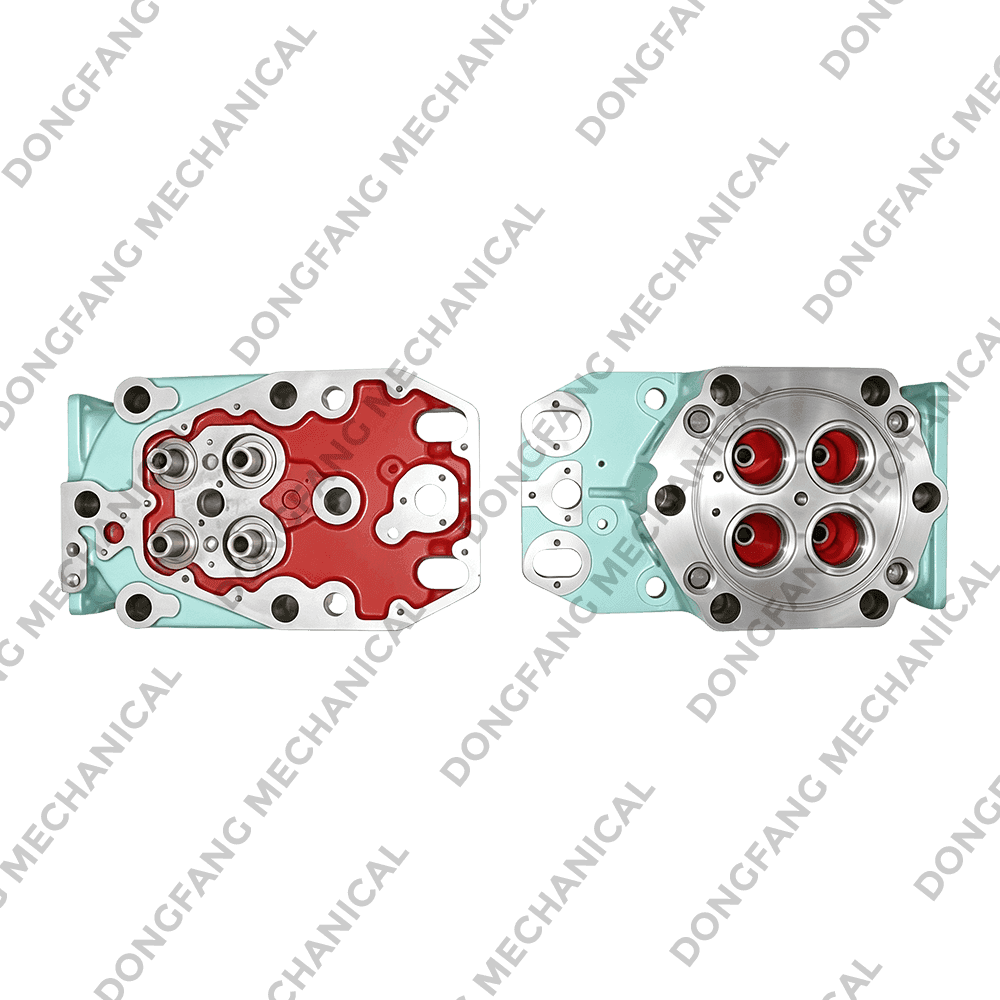
Replacement Spare Parts Compatible with Niigata Marine Diesel Engines exist to restore an engine to its original sealing performance, thermal behavior, and dimensional fit without requiring modification to the vessel's existing engine architecture. Among these components, the cylinder head is the most demanding to reproduce accurately, since it must match the original bore spacing, valve seat geometry, coolant passage layout, and gasket surface flatness closely enough for the part to install as a direct fit. When a cylinder head compatible with Niigata marine diesel engines is produced with tight dimensional control, it integrates into the engine block, valvetrain, and cooling circuit without introducing compression loss, coolant leakage, or uneven thermal loading that could shorten the component's service life.
The direct takeaway for fleet operators and maintenance planners is that any Cylinder head aftermarket replacement part should be judged on measurable compatibility factors: dimensional accuracy against original specifications, material integrity, sealing surface flatness, and consistency across production batches. This article reviews measured compatibility data, wear trends, and material comparisons to give a practical basis for evaluating a cylinder head replacement for Niigata diesel engines before it goes into service.
Core Compatibility Metrics Across Replacement Part Sources
When evaluating a cylinder head intended to replace an original Niigata marine engine component, five metrics matter most: dimensional accuracy, valve seat alignment, gasket surface flatness, coolant passage matching, and batch-to-batch consistency. The horizontal bar chart below scores two common sourcing approaches against these metrics on a 0-100 index built from typical field performance ranges: parts produced from reverse-engineered dimensional data and parts produced from digitally scanned reference models. The digitally scanned approach scores highest on dimensional accuracy and valve seat alignment, since 3D scanning captures original geometry with far less cumulative measurement error than manual reverse engineering, while both approaches can achieve comparable coolant passage matching when core-forming tooling is well maintained.
This index-based comparison shows that digitally scanned production extends its advantage mainly in dimensional accuracy and valve seat alignment, the two factors most likely to affect how cleanly a replacement part installs into an existing engine block. Understanding this profile helps buyers assess why sourcing method matters as much as material specification when selecting Replacement Spare Parts Compatible with Niigata Marine Diesel Engines.
Sealing Performance Across Post-Installation Operating Hours
A key indicator of replacement cylinder head quality is how well the sealing interface holds compression once the engine returns to regular service. The line chart below tracks a relative sealing performance index across five stages of post-installation operating hours, from an early 500 hours up to 8,000 hours in a typical Niigata marine engine application. A gradual, controlled decline is expected as gasket material and mating surfaces experience normal thermal cycling, but the trend should remain smooth rather than dropping sharply at any single stage, since a sudden decline would suggest a dimensional mismatch at the gasket surface rather than routine wear.
The sealing performance index declines from roughly 99% at 500 hours to about 85% at 8,000 hours, a gradual pattern consistent with normal gasket seating and thermal cycling rather than premature failure. This kind of predictable curve is exactly why dimensional precision at the manufacturing stage matters: a properly fitted cylinder head replacement for Niigata diesel engines should age in this smooth, expected way rather than developing sudden compression loss.
Where Niigata-Compatible Replacement Parts Are Commonly Deployed
The application spread of replacement parts compatible with Niigata marine diesel engines reflects the wide range of vessel types that rely on this engine platform for both main propulsion and auxiliary duty. The vertical bar chart below shows a representative usage breakdown across common vessel categories, based on aggregated field usage patterns. Fishing vessels lead the distribution, followed by tugboats and workboats, small cargo vessels, and auxiliary generator installations.
Fishing vessels account for roughly 33% of typical deployment, reflecting how widely this engine platform is used across coastal and offshore fishing fleets that depend on dependable replacement part availability. Tugboats and workboats follow closely, since these vessels rely on both propulsion and auxiliary Niigata engines for daily maneuvering and onboard power needs.
Reverse-Engineered Fit Versus Digitally Scanned Fit
A radar chart helps visualize the trade-off between a replacement cylinder head produced using traditional reverse-engineering methods and one produced using digital 3D scanning of an original reference component. The chart below compares both across dimensional accuracy, installation fit, lead time flexibility, tooling adaptability, and consistency across production runs. The digitally scanned approach extends further on dimensional accuracy and consistency, since scan-based data removes cumulative measurement error, while the reverse-engineered approach can extend further on tooling adaptability for older or less common Niigata engine variants where original reference parts are harder to source for scanning.
Neither shape covers every dimension, reinforcing why the choice of production method should be matched to the specific Niigata engine variant being serviced rather than assuming one approach is universally superior. Common, widely serviced engine models benefit most from digitally scanned accuracy, while less common variants can still be well served by a carefully produced Cylinder head aftermarket replacement part built using reverse-engineering methods.
Practical Selection Guidance by Application
Choosing the right replacement part starts with identifying the exact engine model, service history, and expected duty cycle of the vessel. The table below summarizes practical guidance across common scenarios.
Scenario-Based Selection Reference
| Application | Suitable Approach | Reason |
|---|---|---|
| Common fishing vessel Niigata models | Digitally Scanned Replacement Cylinder Head | High dimensional accuracy for direct-fit installation |
| Older or discontinued Niigata variants | Cylinder head aftermarket replacement part (reverse-engineered) | Greater tooling adaptability for limited reference availability |
| Generator or auxiliary engine applications | Digitally Scanned Replacement Cylinder Head | Consistent fit supports stable long-duration operation |
| Tug and workboat Niigata engines | Digitally Scanned Replacement Cylinder Head | Reliable sealing performance for frequent load cycling |
Before installing a replacement cylinder head or other spare part compatible with a Niigata marine diesel engine, a few additional checks help support reliable performance:
- Confirm the exact engine model and serial number against the replacement part's compatibility specification.
- Verify gasket surface flatness before installation to support proper sealing.
- Check coolant passage alignment against the original engine block layout.
- Inspect valve seat and guide dimensions before final assembly.
- Follow proper torque sequencing during installation to maintain even sealing pressure.
Manufacturing Consistency Behind Dependable Replacement Fit
The predictable sealing performance curve discussed earlier depends on consistent manufacturing controls, including accurate reference data capture, controlled casting or forging processes, and precise CNC finishing of critical mating surfaces. Variation in any of these steps can shift dimensional accuracy and how evenly a replacement cylinder head performs once installed, which is why tight process control matters throughout production. Automated machining combined with in-process dimensional verification helps keep each Niigata-compatible cylinder head performing within tight tolerances across its service life, supporting the reliability trends referenced throughout this article.
Standard quality checkpoints such as pressure testing, gasket surface flatness verification, and dimensional inspection against original reference data support the performance trends shown earlier. For maintenance teams sourcing any Cylinder head aftermarket replacement part at scale, confirming these quality checkpoints with a supplier is often as valuable as reviewing published specifications alone.
About Zhoushan Putuo Dongfang Machinery Co., Ltd.
Zhoushan Putuo Dongfang Machinery Co., Ltd. is located in the Shenjiamen Pingyang Industrial Zone, a well-known fishing port area. It faces the famous Putuo Mountain across the sea, and enjoys convenient land, sea, and air transportation. This location places the company at the center of a region where marine engine maintenance and spare parts supply are part of daily operations, giving practical, field-tested insight into what fishing fleets and small vessel operators need from a dependable replacement cylinder head.
The company focuses on producing precision-fitted Replacement Spare Parts Compatible with Niigata Marine Diesel Engines, with attention to dimensional accuracy, sealing surface quality, and consistent batch production. Its position within a major fishing port area supports practical, field-informed manufacturing while maintaining the process controls needed to serve vessel operators seeking a reliable cylinder head replacement for Niigata diesel engines.
Frequently Asked Questions
Q1: How is compatibility with a specific Niigata engine model confirmed?
A1: Compatibility is confirmed by matching the replacement part's dimensional specification, bolt pattern, and coolant passage layout against the original engine model and serial number before ordering.
Q2: How often should a replacement cylinder head be inspected after installation?
A2: Inspection intervals should follow tracked operating hours and sealing performance trends, since gasket seating typically declines gradually rather than at one fixed universal interval.
Q3: Is a digitally scanned replacement part always the better option?
A3: Not necessarily; digital scanning offers stronger dimensional accuracy for common engine models, while reverse-engineered production can still serve older or less common Niigata variants effectively.
Q4: What causes uneven sealing after a cylinder head replacement?
A4: Warped gasket surfaces, inconsistent torque sequencing, or dimensional mismatch at the mating surface are common causes, which is why flatness checks and proper installation procedure matter.
Q5: What manufacturing factors most affect replacement part reliability?
A5: Accurate reference data capture, controlled casting processes, and precise CNC finishing are key factors, supported by process checks such as pressure testing and dimensional verification during production.