عربى
عربى 
Content
- 1 What a Dual Fuel Engine Does Differently
- 2 Two Combustion Routes, Two Sets of Loads
- 3 Why the Cylinder Head Carries More Load in Gas Mode
- 4 Pilot Fuel Share: How Much Diesel Is Still Needed
- 5 Substitution Rate Falls Before the Engine Runs Out of Load
- 6 What Gas Mode Does to Emissions
- 7 Purpose Built Dual Fuel Engine or a Conversion
- 8 Sourcing Cylinder Heads for a Dual Fuel Fleet
A chief engineer running a 6,000 kW four stroke auxiliary set has two numbers in front of him. Gas is priced at roughly two thirds of very low sulphur fuel oil on his route, and the cylinder head he has just pulled from service has 12,000 running hours on it with worn exhaust valve seats. Those two numbers explain almost everything about the dual fuel engine.
The short answer is simple. A dual fuel engine is a diesel engine that can run on gas as its main fuel, using a small amount of liquid fuel as the ignition source, and that can switch back to liquid fuel whenever the operator needs it. The cylinder head matters so much because gas mode changes the pressure, the heat release and the valve loading inside the combustion chamber, and the head is where all three of those arrive. What follows covers the two combustion routes, the real cost of pilot fuel, the way substitution rate falls with load, and the part details that decide whether a replacement head survives gas mode.
What a Dual Fuel Engine Does Differently
A dual fuel engine starts life as a diesel engine. The block, crankshaft, connecting rods and power rating stay in the same class, and the engine keeps the compression ignition principle that made diesel reliable in the first place. What changes is the gas supply system, the combustion chamber design, the control software and, on most four stroke conversions, the cylinder head itself.
In gas mode the engine burns natural gas, and in some installations liquefied petroleum gas or methanol, as the main energy source. A small quantity of diesel or marine gas oil is injected as pilot fuel and provides the ignition energy. Because the pilot flame lights the gas and air charge rather than the reverse, the engine holds the same efficiency band as diesel operation while producing almost no sulphur oxides. When the gas supply is interrupted, or when the vessel is manoeuvring and the operator wants instant response, the engine returns to diesel mode within a few combustion cycles.
Operators choose dual fuel for three practical reasons. The first is compliance: gas mode cuts nitrogen oxides by roughly 85 percent, which meets IMO Tier III limits without a selective catalytic reduction unit. The second is cost: on many routes the price gap between liquefied natural gas and very low sulphur fuel oil covers the higher capital cost of the engine and the gas tank within a few years. The third is optionality: the same engine can burn whichever fuel the market and the regulations make cheapest that month.
For large two stroke main engines, one widely used approach injects gas late in the compression stroke at high pressure, which keeps the original diesel combustion cycle intact and avoids losing unburned methane to the exhaust.
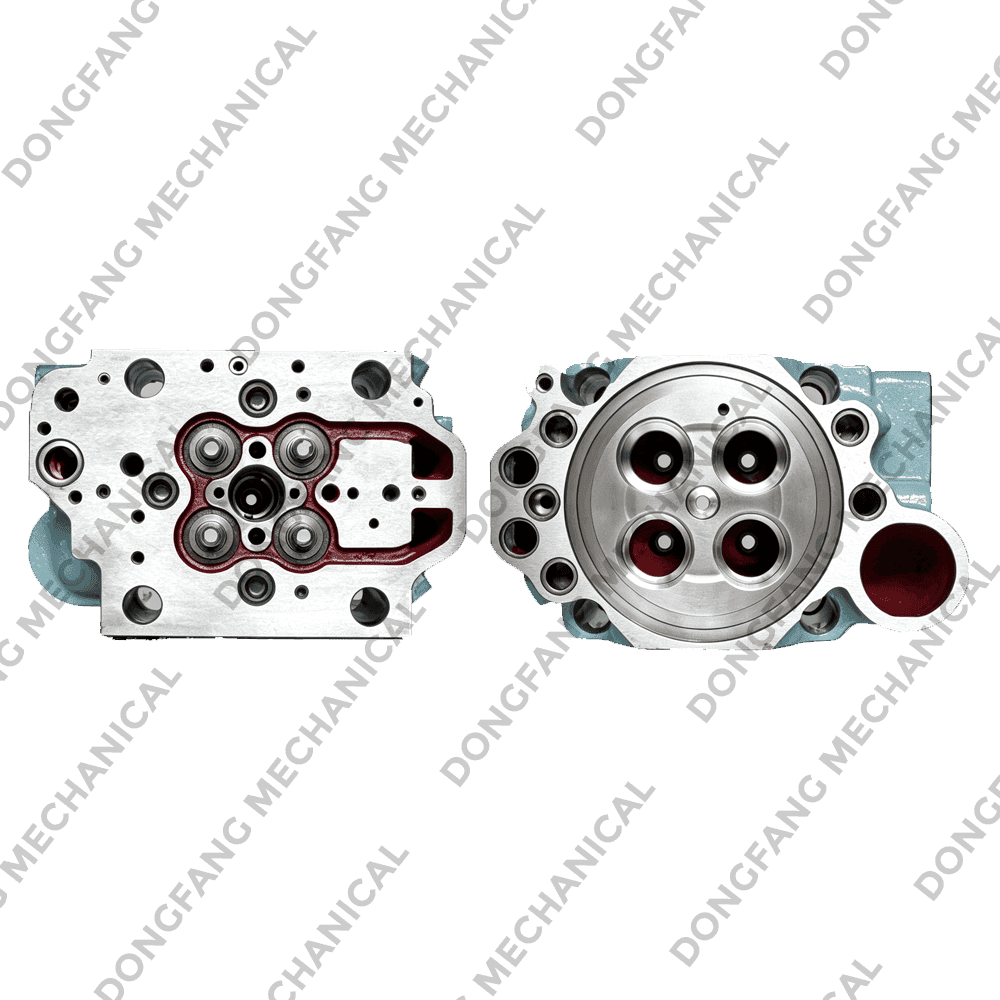
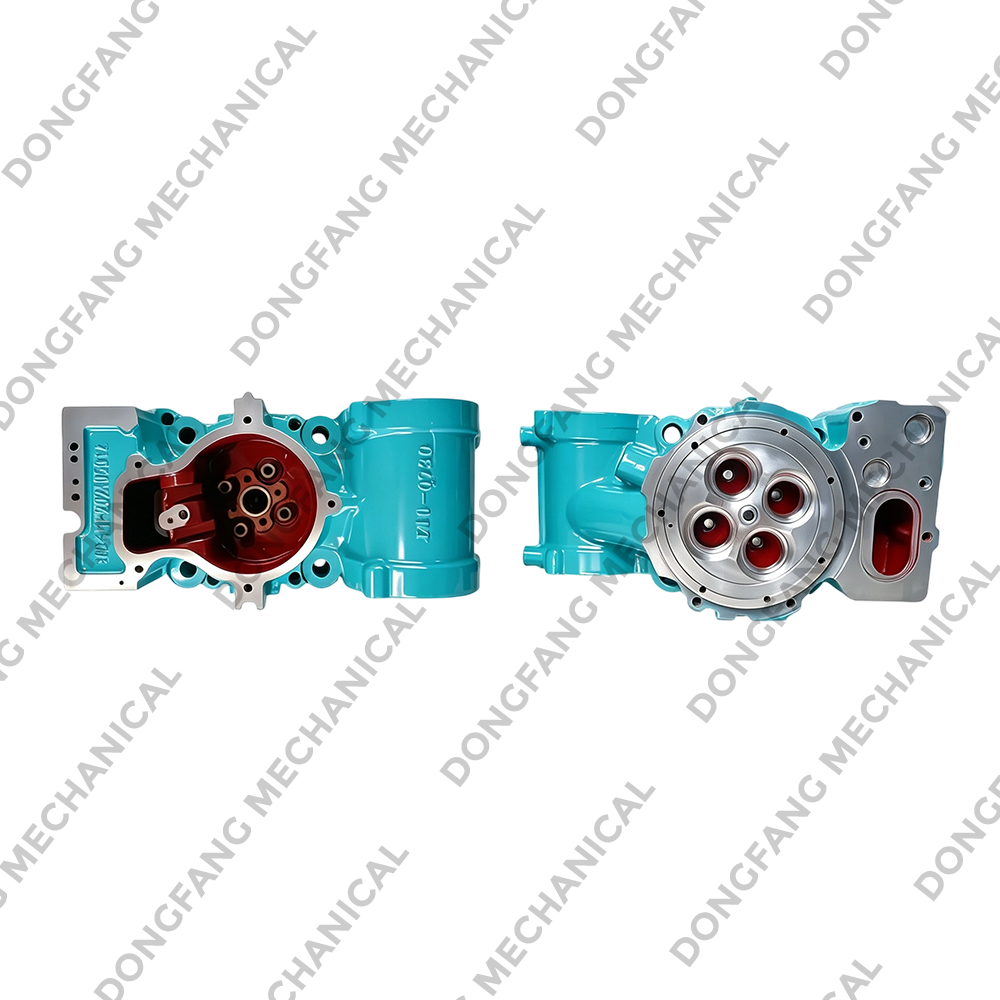 DONGFANG Cylinder Head | Replacement Spare Parts Compatible with MAN Marine Diesel EnginesCompatible Models: L16/24, L23/30, L23/30H, L28/32A, S26MC, L31, L35MC, S35MC, L50MC-C I. Product Overview DONGFANG cylinder heads are third-party compatible replaceme...View Product →
The trade off sits on the maintenance side. Dual fuel engines ask more of the top end: more precise injector and valve timing, tighter tolerances on sealing surfaces, and a cylinder head that has to cope with two different heat release patterns instead of one.
Two Combustion Routes, Two Sets of Loads
Most dual fuel discussions come down to which cycle the engine uses in gas mode, because that choice sets the gas pressure, the pilot fuel quantity, the methane slip level and the loads that reach the cylinder head.
| Parameter | Low pressure gas mode | High pressure gas mode |
|---|---|---|
| Combustion cycle | Otto, premixed charge | Diesel, diffusion flame |
| Gas supply pressure | About 5 to 6 bar | About 300 to 350 bar |
| Gas admission point | Intake stroke, mixed with air | Late compression, direct into cylinder |
| Pilot fuel share at full load | About 1 percent | About 3 to 5 percent |
| Methane slip | Measurable, higher at low load | Negligible |
| Compression ratio | Lower, knock limit applies | Standard diesel level |
| Typical duty | Four stroke auxiliary and medium speed main engines | Large two stroke main engines |
| Head features to verify | Gas admission ports, hardened seats, cooling passages | Gas injector bore, sleeve fit, fire deck hardness |
Neither route is better in absolute terms. The low pressure route dominates four stroke auxiliary and medium speed engines, where the gas system is simpler and the machinery space has room for it. The high pressure route is used on large two stroke main engines, where methane slip is not acceptable and a gas compressor is already part of the installation.
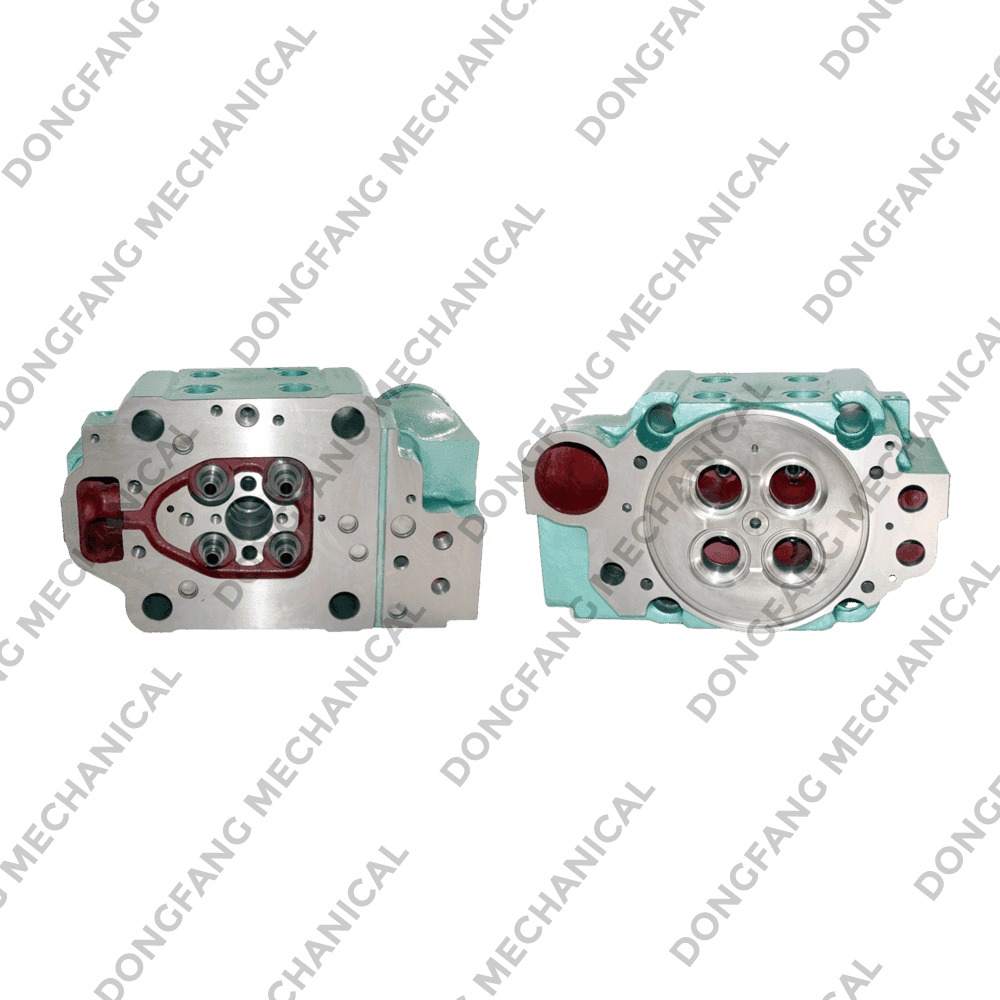
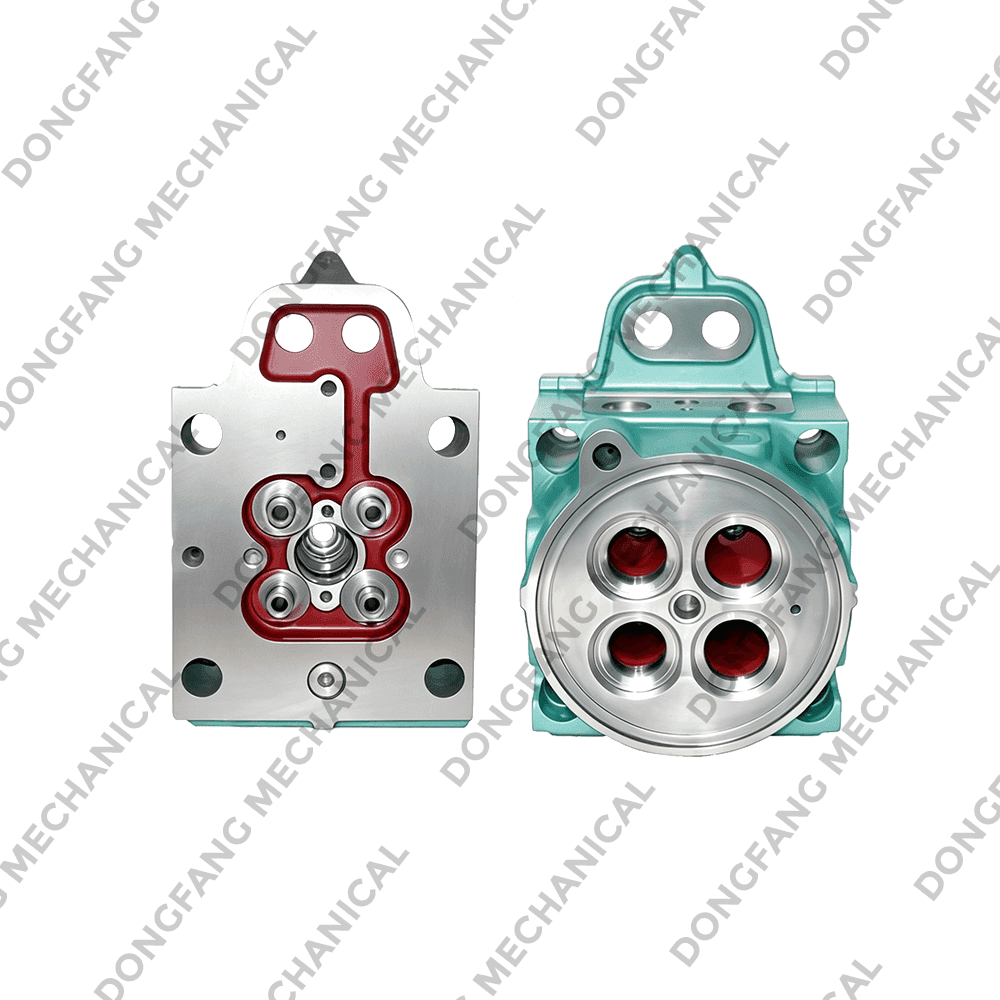 DONGFANG Cylinder Head | Replacement Spare Parts Compatible with Wartsila Marine Diesel EnCompatible Models: R20, L20, R22, R25, R32 I. Product Overview DONGFANG cylinder heads are high-quality aftermarket replacement parts independently developed and manuf...View Product →
Why the Cylinder Head Carries More Load in Gas Mode
Gas mode raises peak cylinder pressure and changes the shape of the heat release curve, so the fire deck, the valve seats and the valve cages see a harder cycle than they would in straight diesel service. In port injection conversions, the head also carries gas admission valves, which means additional bores, additional sealing surfaces and a second path for leakage. Anyone who wants the background on the part itself can read how a cylinder head is built and what each surface does.
- Valve seat hardness and seat angle, because gas mode runs hotter exhaust valves at part load.
- Valve cage and guide fit, because worn guides let the valve misalign and destroy the seat.
- Cooling passage cleanliness, because a partly blocked passage turns into a cracked fire deck.
- Gas admission valve bores on converted engines, which must match the conversion kit specification.
The practical consequence is that a replacement head for a dual fuel engine cannot be bought on the bore size alone. The engine version, the gas mode rating and the conversion kit all change the drawing that the head has to match.
Pilot fuel is the part of the fuel bill that operators forget, and it is not a fixed number. The chart below shows typical pilot shares for five configurations.
The chart shows how much of the total energy still has to come from liquid fuel in five common configurations. A low pressure four stroke engine at full load needs only about one percent pilot fuel, which is why operators treat gas mode as almost completely gas fired. Push the same engine down to a quarter load and the pilot share climbs to roughly eight percent, because the mixture becomes too lean to ignite reliably without more diesel energy. High pressure two stroke engines run at around three percent at full load, and diesel to gas retrofits sit close to five percent because their gas admission and control systems are less precise than those of a purpose built engine. At low load the retrofit figure can reach fifteen percent, which is enough to change the fuel cost calculation for a vessel that spends long periods manoeuvring in port.
Substitution Rate Falls Before the Engine Runs Out of Load
Substitution rate is the share of liquid fuel that gas actually replaces, and it is not constant across the load range.
The red curve shows a purpose built low pressure dual fuel engine holding about 40 percent substitution at quarter load and reaching roughly 95 percent at full load. The blue curve shows a diesel engine converted to gas operation, which starts near 25 percent at quarter load and climbs to about 90 percent at full load. The gap between the two curves is widest at part load, which is exactly where ferries, harbour craft and offshore support vessels spend most of their running hours. A fleet that calculates savings from nameplate figures at full load will overestimate them whenever the duty cycle is dominated by part load. That is why the load profile, not the engine rating, should drive the choice between a factory dual fuel engine and a conversion.
What Gas Mode Does to Emissions
Gas mode lowers every regulated pollutant compared with liquid fuel operation, but not by the same margin.
Sulphur oxides fall by around 99 percent because natural gas contains almost no sulphur, which alone satisfies the 0.50 percent global cap and the 0.10 percent limits inside emission control areas. Particulate matter drops by roughly 95 percent, and nitrogen oxides fall by about 85 percent, enough to reach Tier III without any after treatment device. Carbon dioxide falls by only about 22 percent, because that saving comes from the hydrogen to carbon ratio of the fuel rather than from combustion technology. The chart also shows why gas mode is often described as a compliance tool rather than a climate solution: the nitrogen oxide and sulphur gains are large and immediate, while the carbon gain is moderate. As carbon intensity rules tighten, dual fuel operation helps a fleet stay compliant, but it does not deliver deep decarbonisation on its own.
Purpose Built Dual Fuel Engine or a Conversion
Both options run on gas, but they do not behave the same way, and the radar comparison below scores them across the six criteria that operators weigh most often.
The two shapes are scored from zero to one hundred across six criteria, and a larger shape is better. The purpose built engine leads on fuel flexibility, nitrogen oxide headroom and carbon dioxide benefit, because its combustion chamber, valve timing and control maps were designed for gas from the start. The conversion scores higher on retrofit friendliness, since it keeps an existing engine in service instead of replacing it, and it remains competitive on fuel cost savings. The weakest area for both is top end component life, because gas mode raises peak pressure and changes heat release, so valve seats, valve cages and the fire deck of the cylinder head work harder than in straight diesel service. A conversion narrows that margin further, which is why replacement heads for converted engines should always be checked against the gas mode specification instead of the original diesel drawing.
Sourcing Cylinder Heads for a Dual Fuel Fleet
Procurement for dual fuel engines is mostly a matching problem. The same engine family can exist in diesel, low pressure gas and high pressure gas versions, and the cylinder head differs between them in small but critical ways: injector sleeve diameter, valve seat material, gas admission ports and cooling passage layout. A head that fits the diesel version of an engine may physically bolt onto the gas version and still fail early, because the material and the seat hardness were never specified for the higher peak pressure.
The check list before ordering is short. Confirm the engine model and build version, not just the bore. Confirm whether the engine runs low pressure or high pressure gas mode. Confirm whether the head needs gas admission valve bores. Confirm the valve seat angle and hardness requirement. Then confirm lead time and stock position, because a vessel waiting on a head is a vessel not earning.
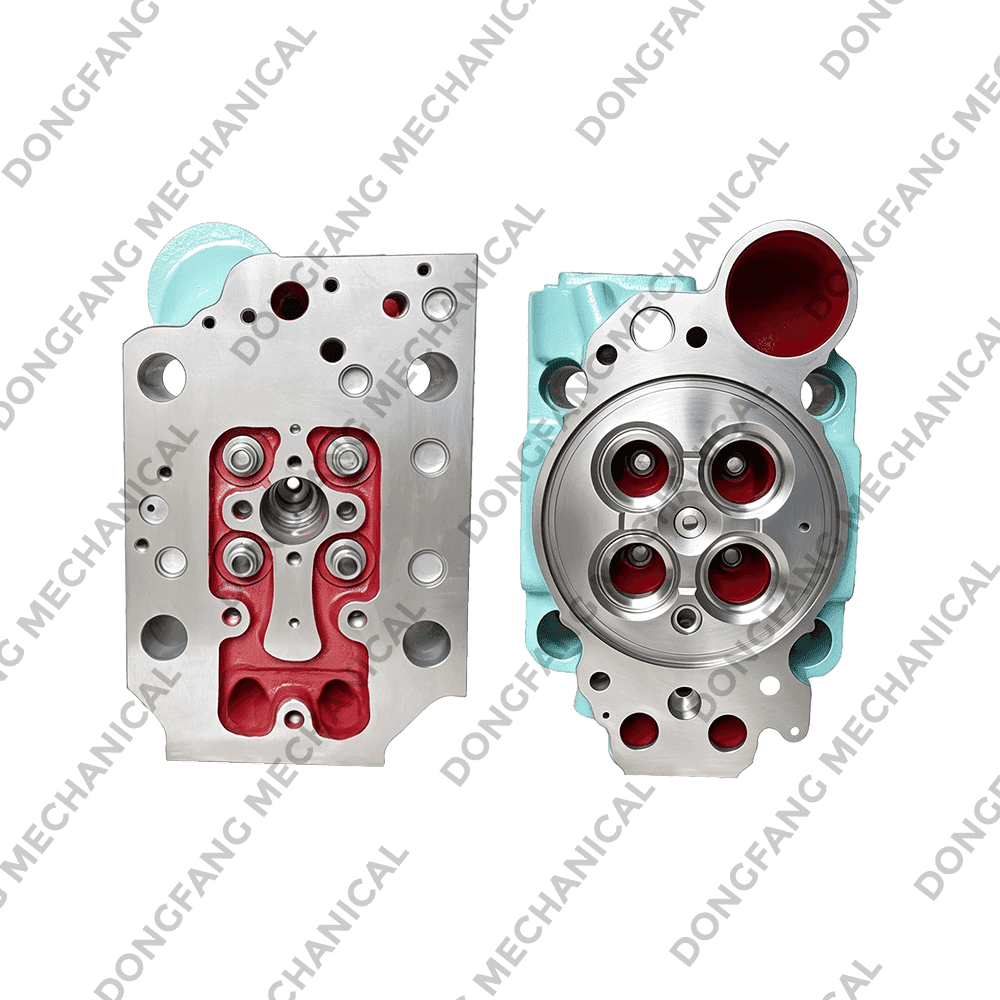
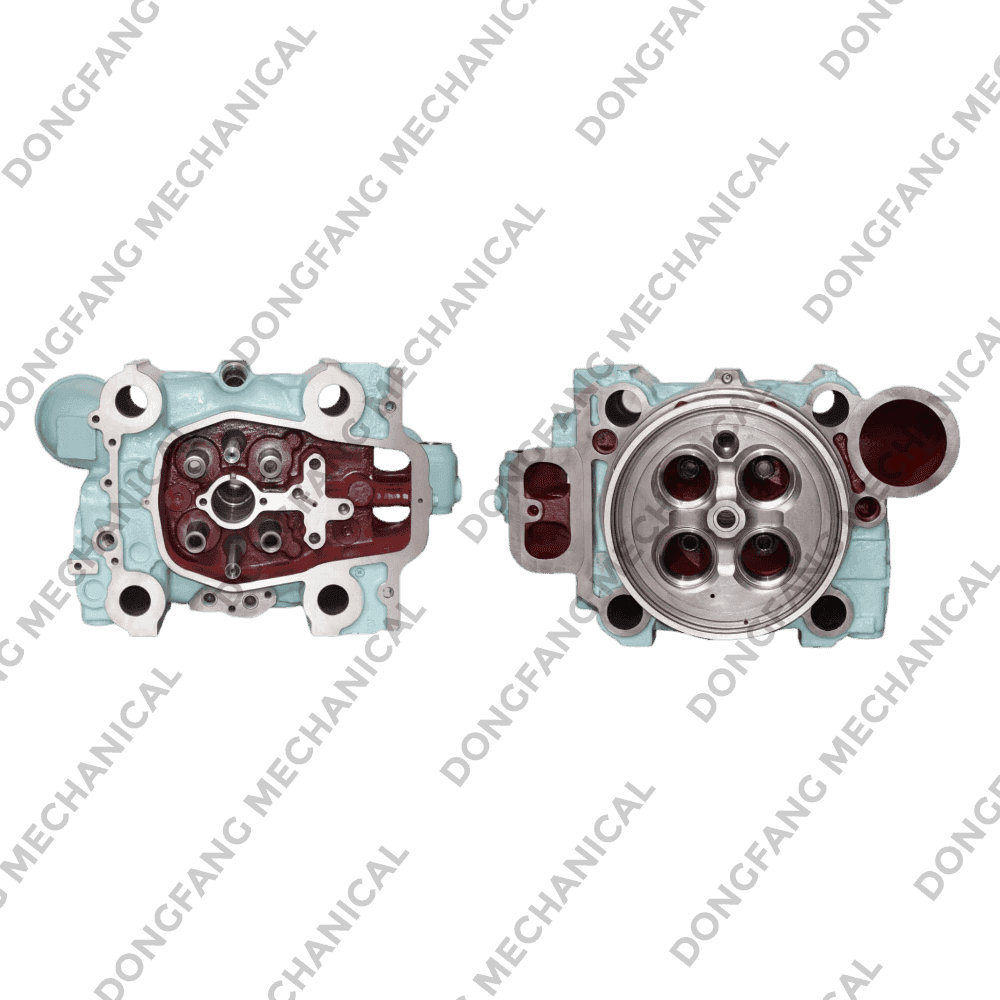
Zhoushan Putuo Dongfang Machinery supplies cylinder head replacement spare parts for marine diesel engines, covering four stroke auxiliary and medium speed engine families that appear in gas conversion projects as well as in conventional diesel service, including 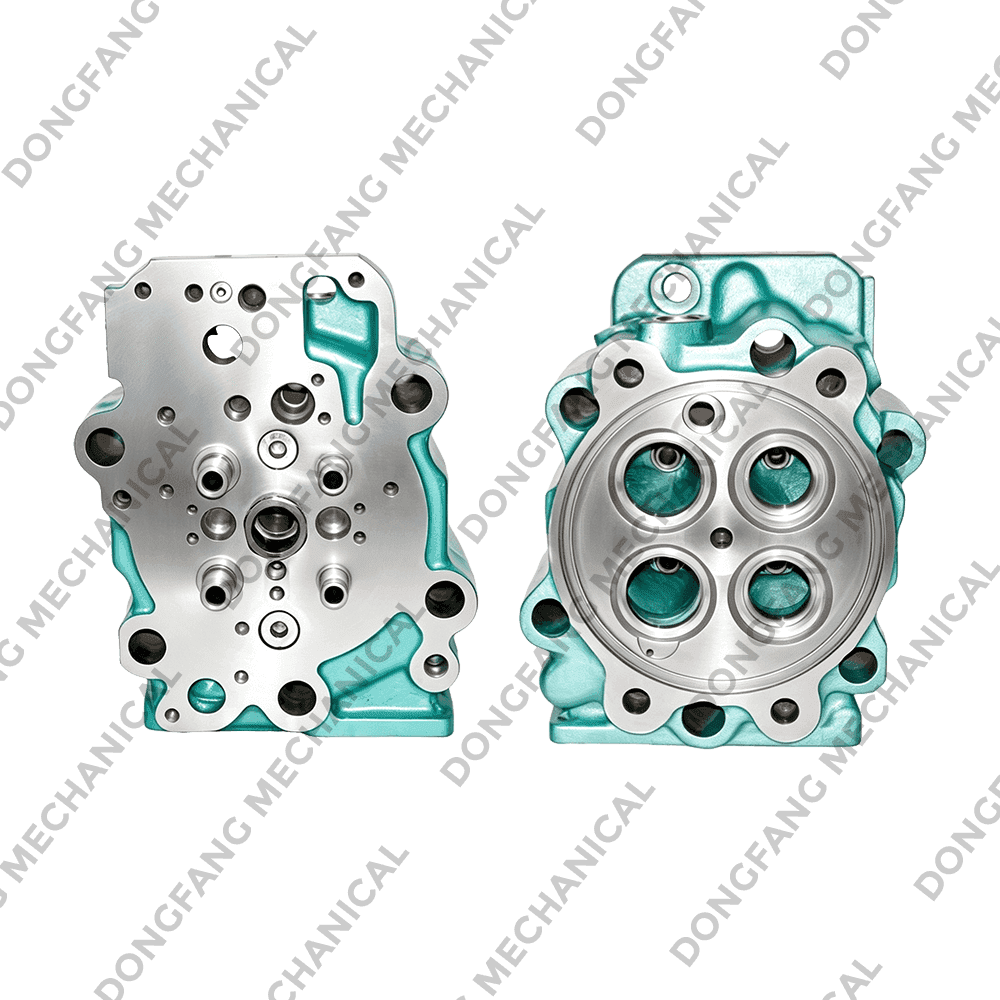 DONGFANG Cylinder Head | Replacement Spare Parts Compatible with Daihatsu Marine Diesel EnCompatible Models: DL-20、DL-22、DL-26、DL-28、DL-32、5DK-20、6DK-20、DK-28、DS-26、PS-26H (D)、DC-17、DE-18View Product →
The full range, including units for domestic diesel engines, is listed in the cylinder head replacement parts catalog, where each page states the engine family the head is compatible with.
The number that finally decides whether dual fuel pays off is not the fuel spread on its own, but the top end maintenance interval behind it. An engine running gas mode for 6,000 hours a year puts its cylinder head through more thermal cycles than a diesel set on the same duty, and the head is a consumable in that arithmetic. Planning replacements around the engine version, the gas mode specification and the real load profile keeps a dual fuel fleet compliant and available without turning a fuel saving into a maintenance surprise.