عربى
عربى 
Content
- 1 When a Marine Engine Rebuild Makes Sense
- 2 Top End Overhaul or Full Engine Rebuild
- 3 The Cylinder Head Decides Rebuild Quality
- 4 Matching Replacement Parts to the Engine on Board
- 5 Tolerances and Inspection Values That Decide the Job
- 6 Procurement Risks and Lead Time Planning
- 7 A Rebuild Sequence That Keeps Downtime Under Control
A fishing vessel comes back to port with blue exhaust smoke, a coolant level that keeps dropping, and an engine that needs longer cranking before it fires. The owner asks whether to repair, rebuild, or replace it. The honest answer is that a marine engine rebuild is the right call when wear is spread across several components and the block and crankshaft are still serviceable. If a single part has failed, a targeted repair costs less. If the block is cracked or the crankshaft is past its regrind limits, a rebuild will not rescue the engine. Everything in between comes down to measurements, parts availability, and how much downtime the vessel can absorb.
When a Marine Engine Rebuild Makes Sense
Rebuild when wear is spread across the top end and the running gear, and when the rebuild cost stays clearly below the price of a replacement engine plus installation. These symptoms usually trigger the decision:
- Oil consumption that climbs between services without any visible leak
- Compression readings that fall and vary noticeably between cylinders
- Exhaust smoke that does not clear once the engine reaches operating temperature
- Iron, copper, or chromium reading high in oil analysis, or metal on the magnetic plug
- Coolant loss with no external leak, or bubbles in the expansion tank
- Hard starting, lower full load rpm, and higher exhaust gas temperature
- A cylinder head that has already been reconditioned at least once
Before any parts are ordered, measure. A compression test, a boroscope look at liners and valve faces, an oil sample, and a record of valve clearance drift over time separate a head problem from a bottom end problem. Rebuilds that start from guesswork usually end with a second haul out and a second set of gaskets.
Top End Overhaul or Full Engine Rebuild
These two scopes are often treated as one job, and the difference shows up on the invoice. A top end overhaul works above the piston crown, while a full rebuild includes the running gear that carries load.
| Item | Top end overhaul | Full engine rebuild |
|---|---|---|
| Components renewed | Cylinder heads, valves, seats, guides, springs, gaskets | The above plus liners, pistons, rings, bearings, crankshaft work, block checks |
| Wear addressed | Valve leakage, seat recession, guide wear, head cracking | Bore wear, ring wear, bearing wear, journal wear |
| Typical trigger | Compression loss with a sound bottom end | Low oil pressure, knocking, high blow by |
| Downtime | Often measured in days per engine | Often measured in weeks and depends on machine shop capacity |
| Cost position | Lower, with limited machining | Higher, but usually below the price of a new engine |
| Best fit | Head related faults caught early | Engines at the end of their planned service interval |
If blow by is high, oil pressure is low at operating temperature, or the crankshaft journals are scored, a top end job alone moves the problem instead of solving it.
The Cylinder Head Decides Rebuild Quality
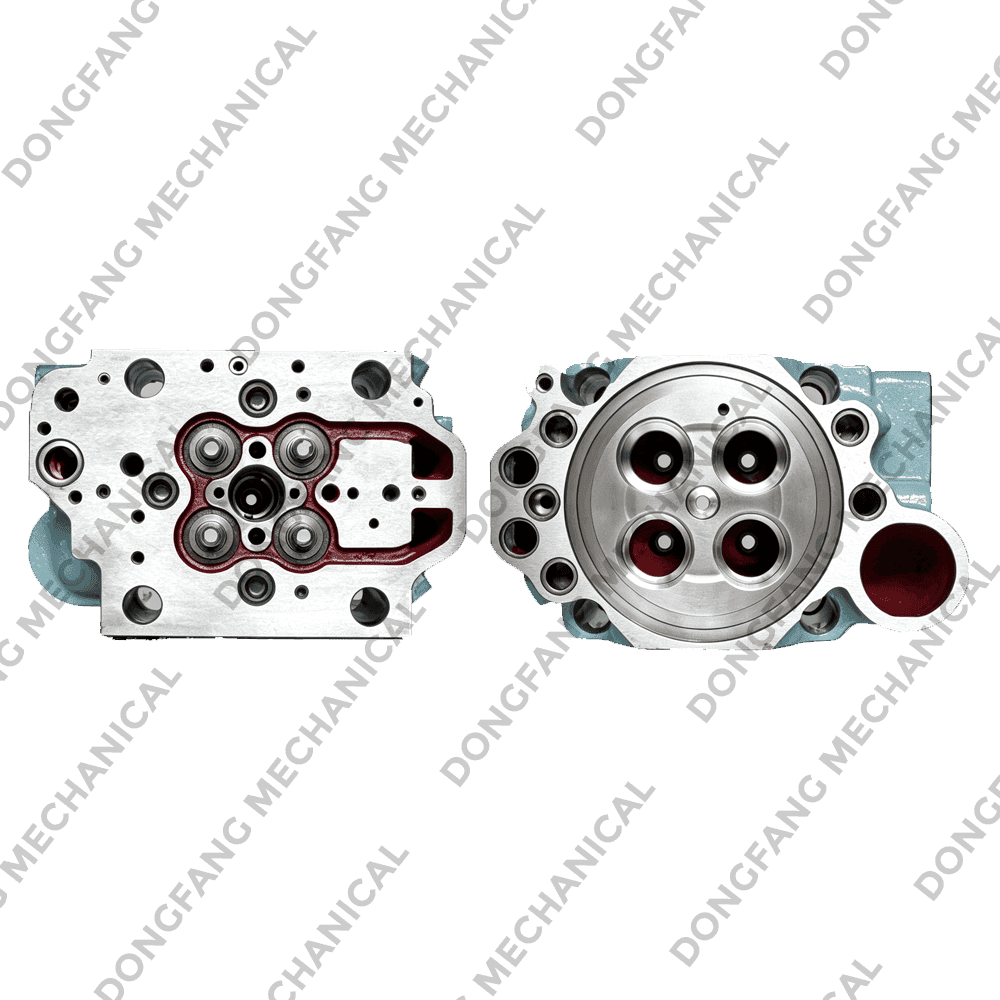
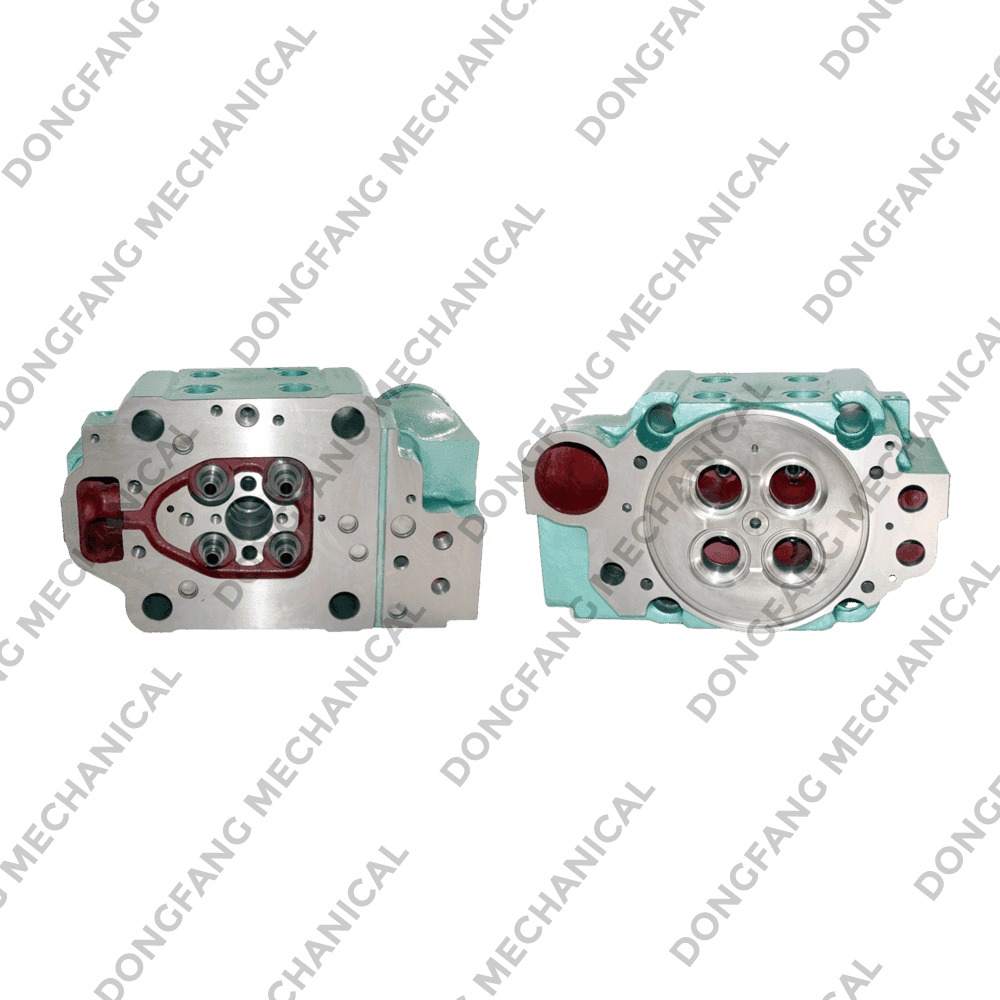
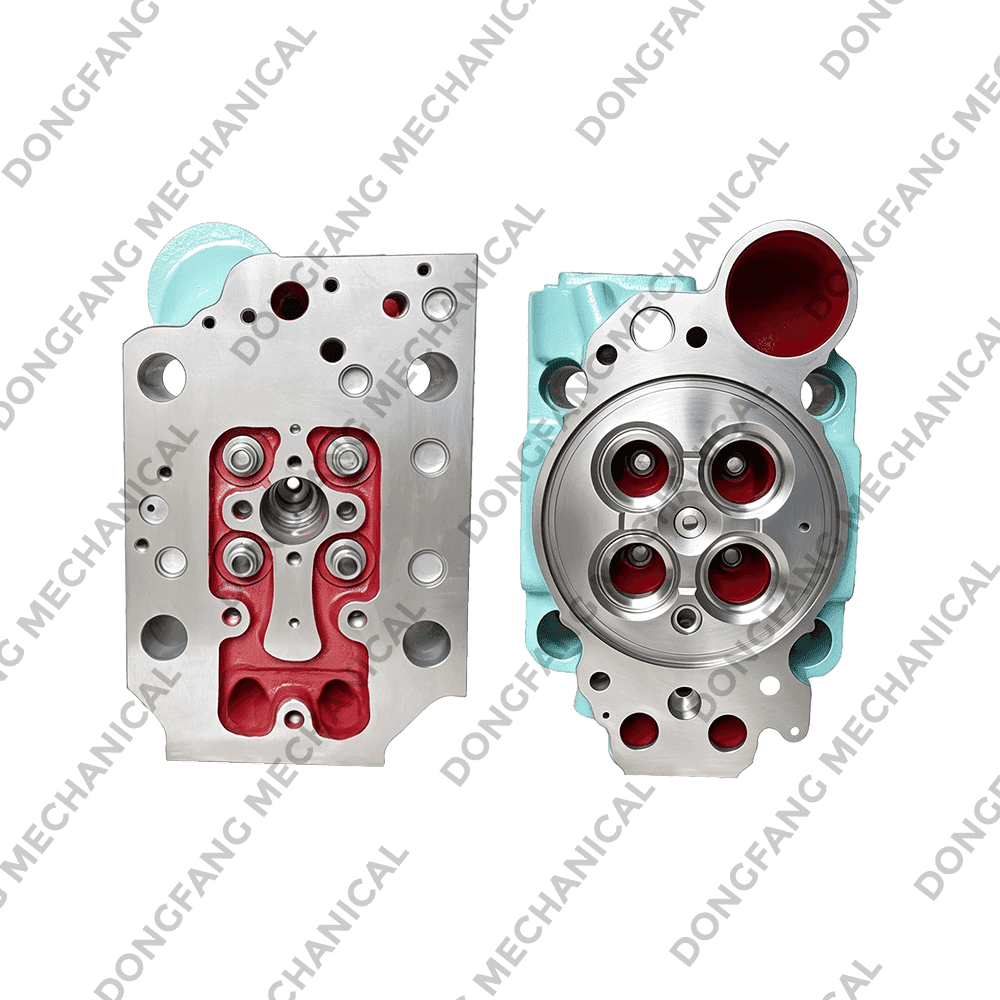
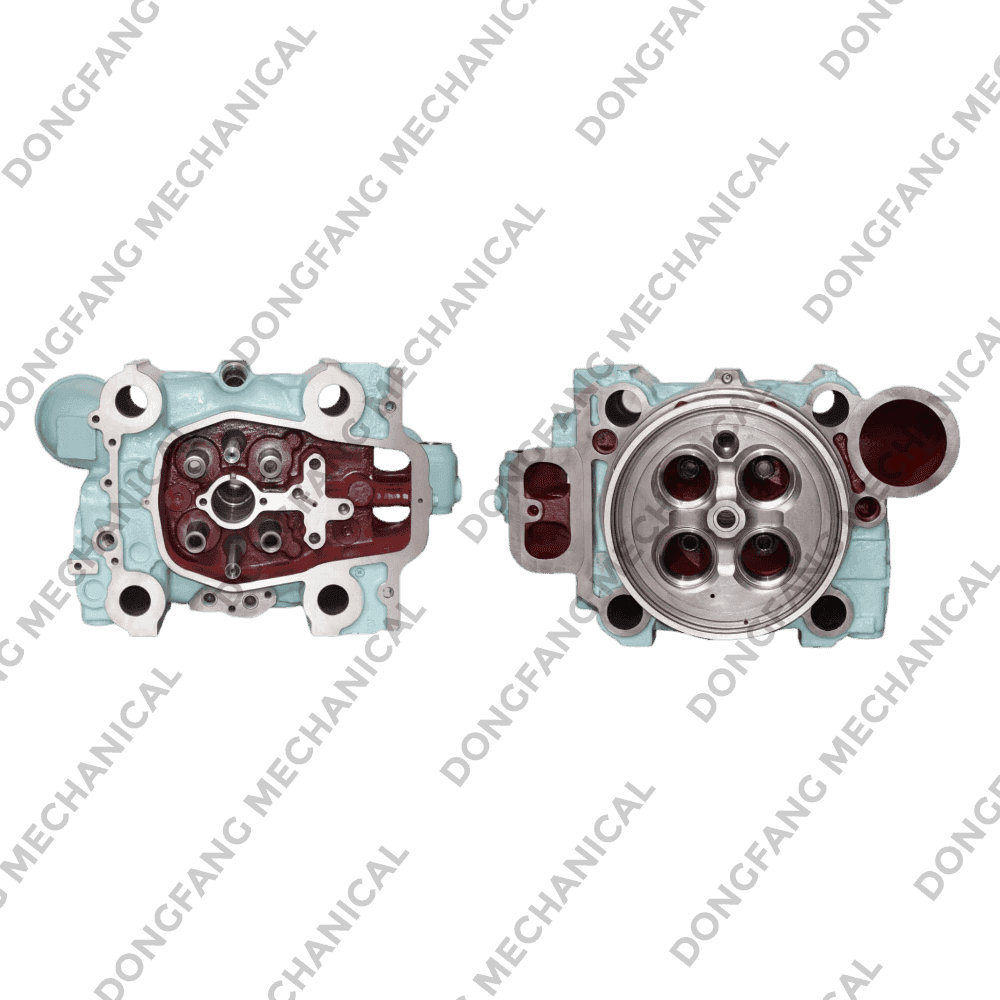
In a large share of marine engine rebuilds, the cylinder head is the first part to fail and the hardest one to judge from the outside. Common damage includes cracking between valve seats, seat recession, worn guides, burnt or pitted valve faces, corrosion in the coolant passages, and distortion of the fire deck. A short explanation of what a cylinder head is and what it seals is useful background before any part is ordered.
Inspection should be documented, not assumed. That means a pressure test for water and gas leaks, crack detection on the fire deck and around the exhaust port, a flatness check with a straight edge and feeler gauge, guide clearance measurement, and a check of valve seat width and recession. A head that passes these checks can be reconditioned. One that fails on a crack between seats is usually replaced.
For medium speed engines in fishing fleets and coastal service, such as MAN units that run long hours at moderate load, a compatible replacement head keeps the job inside a predictable cost band instead of pushing it into open ended machining.
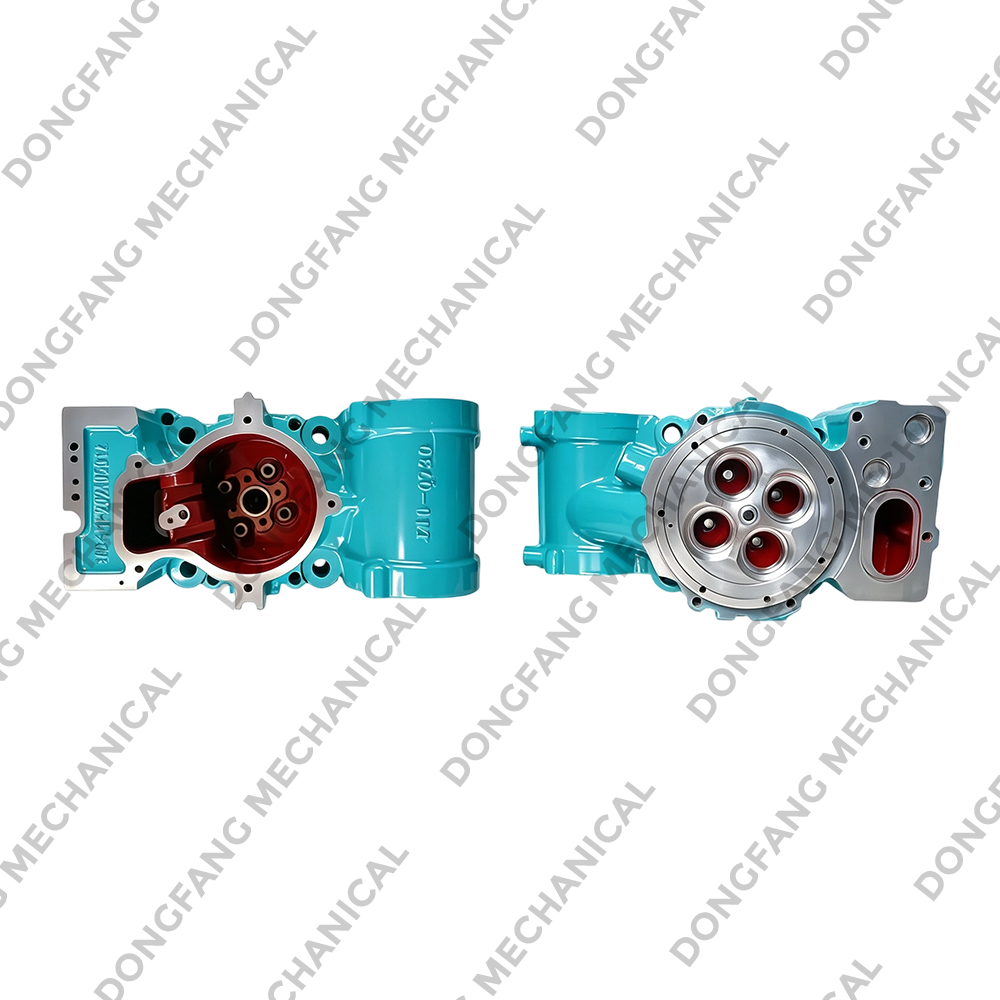 DONGFANG Replacement Cylinder Heads for MAN Marine Diesel EnginesThird-party compatible cylinder heads for MAN marine and industrial diesel engines, matched by model or part number for predictable medium-speed maintenance.View Product →
Matching Replacement Parts to the Engine on Board
Start with the engine nameplate, not with a photo of the old part. Model, serial number, and build data identify the correct head, valve set, seat insert, and gasket. Replacement parts for marine diesels are catalogued by engine make and family, so the nameplate is the fastest route to the right item.
Brands that appear regularly in fishing, coastal, and auxiliary service include Akasaka, Daihatsu, Kobe, MaK, Makita, MAN, Wartsila, Yanmar, Hanshin, and Niigata, alongside a group of domestic diesel engines built to their own specifications. A cylinder head replacement parts catalog organised by engine make keeps the selection process short.
Daihatsu marine diesels are common in smaller fishing boats and auxiliary duties, where heads often reach replacement point after years of hot, cyclic running. Matching valve seat material and guide clearance to the original specification matters more on these engines than the visual similarity of the casting.
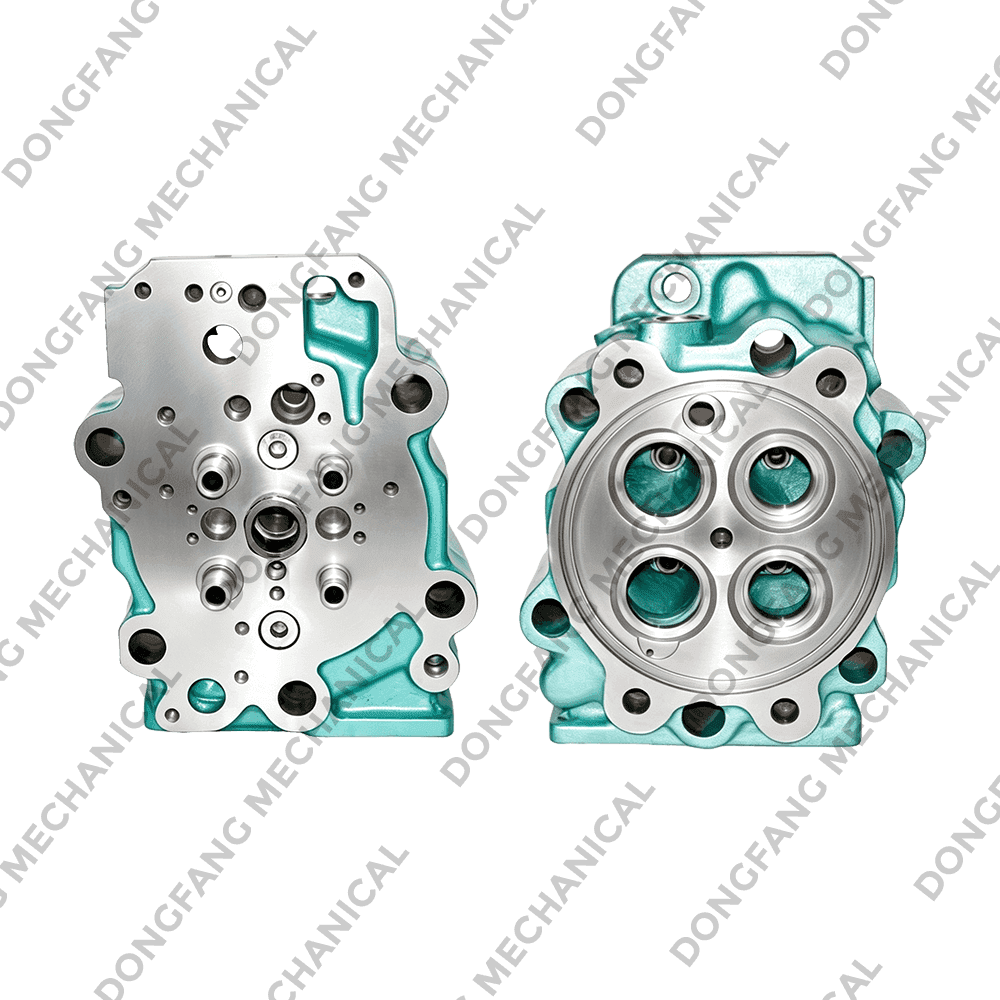 DONGFANG Replacement Cylinder Heads for Daihatsu Marine Diesel EnginesThird-party compatible cylinder heads for Daihatsu marine and industrial diesel applications, catalogued by model for fishing boat and auxiliary engine service.View Product →
Yanmar units in similar service follow the same logic. Confirm the model code, check injector seat and pre chamber details where they apply, and verify that the replacement matches the cooling passage layout of the original.
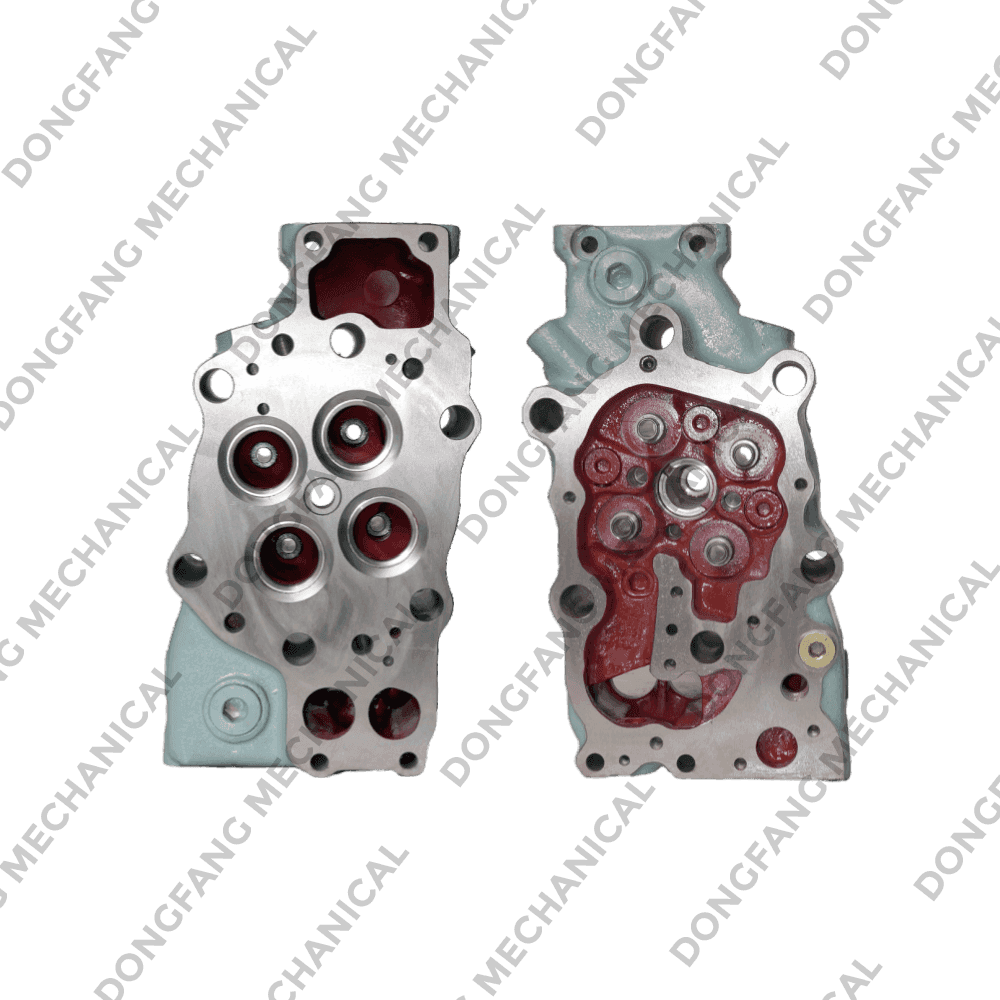 DONGFANG Replacement Cylinder Heads for Yanmar Marine Diesel EnginesThird-party compatible cylinder heads for Yanmar marine and industrial diesels, listed by model for maintenance, auxiliary, and heavy-duty engine service.View Product →
Tolerances and Inspection Values That Decide the Job
Rebuild quality is set by numbers, and the engine maker's manual always wins over a general figure. The values below are typical starting points for medium speed marine diesels and are useful when planning inspection and machining.
- Fire deck flatness: often within 0.05 mm along the head length, checked before any resurfacing
- Valve guide clearance: intake and exhaust values differ, with many engines in the 0.04 to 0.07 mm range
- Valve seat width: commonly held between 1.5 mm and 2.5 mm depending on valve size and duty
- Valve recession: seat insert renewal is usually considered near 1.0 mm to 1.5 mm
- Liner wear: ovality and taper compared with the maker's limit, because a worn liner undoes a good head job
- Fasteners: head bolts or studs showing stretch or corrosion are replaced rather than reused
Machining a head without checking flatness first, or fitting new valves into worn guides, produces an engine that runs well for a few hundred hours and then returns to the same symptoms.
Procurement Risks and Lead Time Planning
Most rebuild delays are not caused by labour. They come from parts arriving late or arriving wrong. A few habits keep the schedule realistic:
- Order against engine model and serial number, and ask for the measurement report of the supplied head
- Treat gaskets, seals, o rings, and head bolts as single use items and list them separately
- Confirm whether the head arrives bare or assembled with valves, springs, and guides
- Store heads flat and protected from moisture, because an unprotected fire deck corrodes quickly in a marine workshop
- Check import lead times before booking the dry dock slot, and keep a small stock of fast moving items
When a vessel is on a schedule, the cost of a week off hire is usually larger than the difference between a cheap part and a correct one.
A Rebuild Sequence That Keeps Downtime Under Control
- Record baseline performance, oil pressure, exhaust temperature, and fuel consumption before shutdown
- Drain, label, and photograph every connection and pipe before removal
- Measure and photograph wear before cleaning, so the evidence survives the wash down
- Verify the parts order against the engine nameplate and the manual specification
- Complete all machining and inspection steps before assembly begins
- Assemble with new fasteners and torque in the maker's sequence and stages
- Run in at reduced load, then re torque, recheck clearances, and take a first oil sample
Written records at each step matter when the same engine is overhauled again years later.
A marine engine rebuild is a decision made from measurements, not from symptoms alone. Confirm the wear pattern first, decide whether the job is top end or full, and treat the cylinder head and its valve gear as the parts that set final quality. Then match every replacement part to the engine nameplate and the maker's tolerances. Vessels that follow this order get a rebuild that holds its compression, keeps its oil pressure, and stays out of the workshop until the next planned interval.