عربى
عربى 
Content
- 1 What Actually Happens During the Four Strokes
- 2 Why Ships Still Run Four Stroke Engines
- 3 Why Four Stroke Cylinder Heads Fail
- 4 Repair or Replace the Cylinder Head
- 5 Ordering a Replacement Cylinder Head for a Four Stroke Engine
- 6 Matching Cylinder Heads by Engine Brand
- 7 Installation and Sea Trial Checks
A fishing vessel comes alongside with a compression leak on one cylinder of its auxiliary engine. The cylinder head is off within a day, and the chief engineer faces a familiar choice: repair the casting or replace it. On a four stroke marine engine, that decision usually comes down to three things, the condition of the valve seats, the flatness of the fire deck, and the result of a pressure test on the cooling passages. Everything after that is a sourcing problem rather than an engineering one.
Four stroke marine engines cover a very wide range of duties, from small generator sets on coastal craft to medium speed main engines on ferries, tugs and fishing boats. What they share is a firing cycle that needs two crankshaft revolutions to complete, and a cylinder head that has to seal combustion, guide the valves, carry the injector and pass coolant at the same time. This article explains how the cycle works, where the cylinder head sits inside that cycle, and how to buy replacement parts without creating a second failure.
What Actually Happens During the Four Strokes
The name comes from the number of piston movements needed to finish one power cycle. Intake, compression, power and exhaust; four piston strokes, two crankshaft revolutions, one injection event per cylinder.
- Induction stroke. The intake valve opens and the piston travels down, drawing in air that has usually already passed through a turbocharger and an aftercooler.
- Compression stroke. Both valves are closed and the piston travels up, squeezing the charge to roughly 30 to 55 bar and heating it well above the ignition temperature of diesel fuel.
- Power stroke. Fuel is injected shortly before top dead centre, it burns, and the expanding gas drives the piston down. This is the only stroke that produces useful work.
- Exhaust stroke. The exhaust valve opens and the rising piston pushes the burnt gas out into the manifold and turbocharger.
Because of that sequence, a four stroke cylinder head has to carry at least one intake valve and one exhaust valve, often two of each, plus the injector, the valve guides, the valve seat inserts and the cooling passages that separate them. The camshaft and the pushrods or rockers that drive those valves are timed to the crankshaft so that every event happens at the correct angle.
A two stroke engine fires on every crankshaft revolution instead, using scavenge ports and one exhaust valve or port. That single difference explains why the two engine types ended up in different jobs on board.
Why Ships Still Run Four Stroke Engines
A two stroke engine produces a power stroke on every revolution, which is exactly why the largest ocean going ships use slow speed two stroke engines as main propulsion: fewer parts, tolerance for heavy fuel oil, and very low fuel consumption per kilowatt hour. Four stroke engines win on other points that matter to owners and operators: lighter weight for the same output, a smaller footprint, better emission control, and higher speeds that let a directly coupled generator produce 50 Hz or 60 Hz power without a gearbox.
In practice, most four stroke marine engines are auxiliary engines, or main engines on smaller vessels. Generator duties usually sit at 750, 1000, 1200, 1500 or 1800 rpm depending on pole count and grid frequency, while medium speed propulsion units typically run between 400 and 1000 rpm.
| Feature | Two Stroke | Four Stroke |
|---|---|---|
| Crankshaft revolutions per cycle | One | Two |
| Gas exchange | Scavenge ports and exhaust valve | Intake valve and exhaust valve |
| Typical use on board | Main propulsion on large ships | Auxiliary engines, main engines on ferries and tugs |
| Typical speed range | 60 to 250 rpm | 400 to 1800 rpm |
| Valves per cylinder head | Usually one exhaust valve | Two or four valves |
| Cylinder head complexity | Lower | Higher |
Why Four Stroke Cylinder Heads Fail
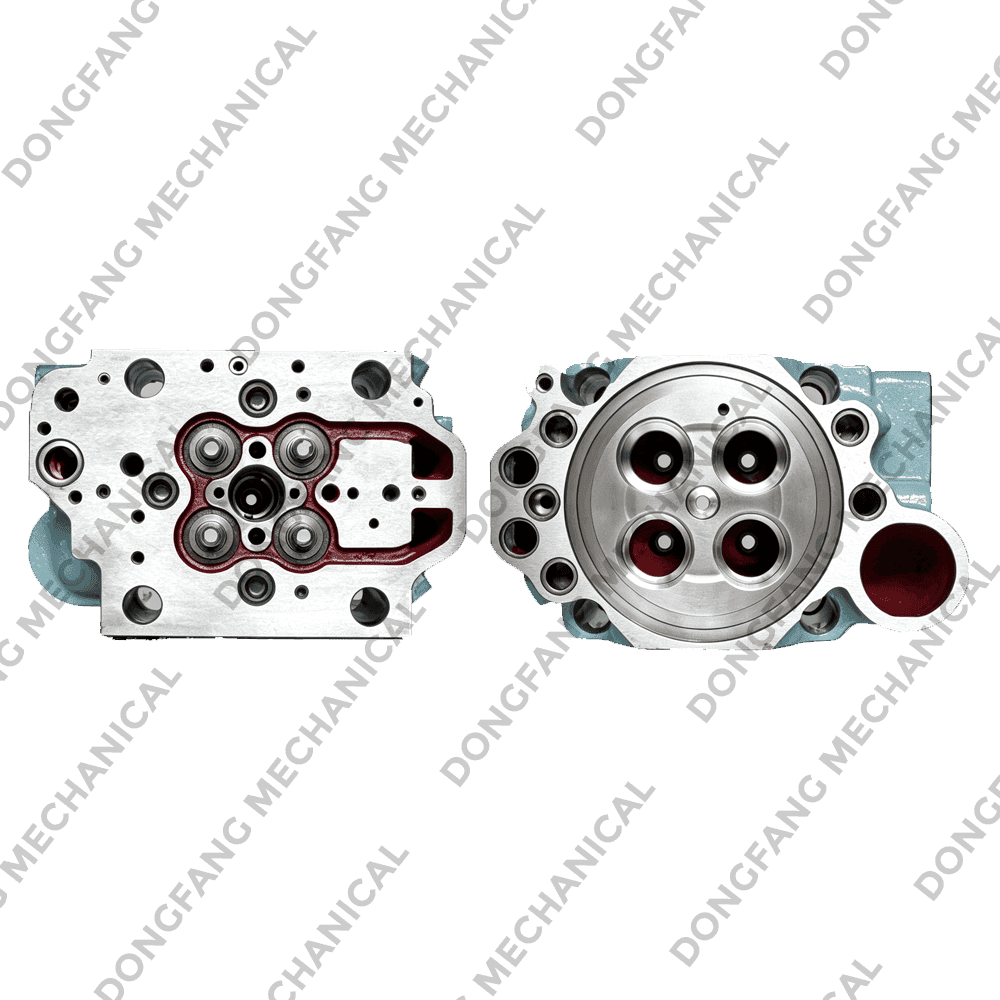
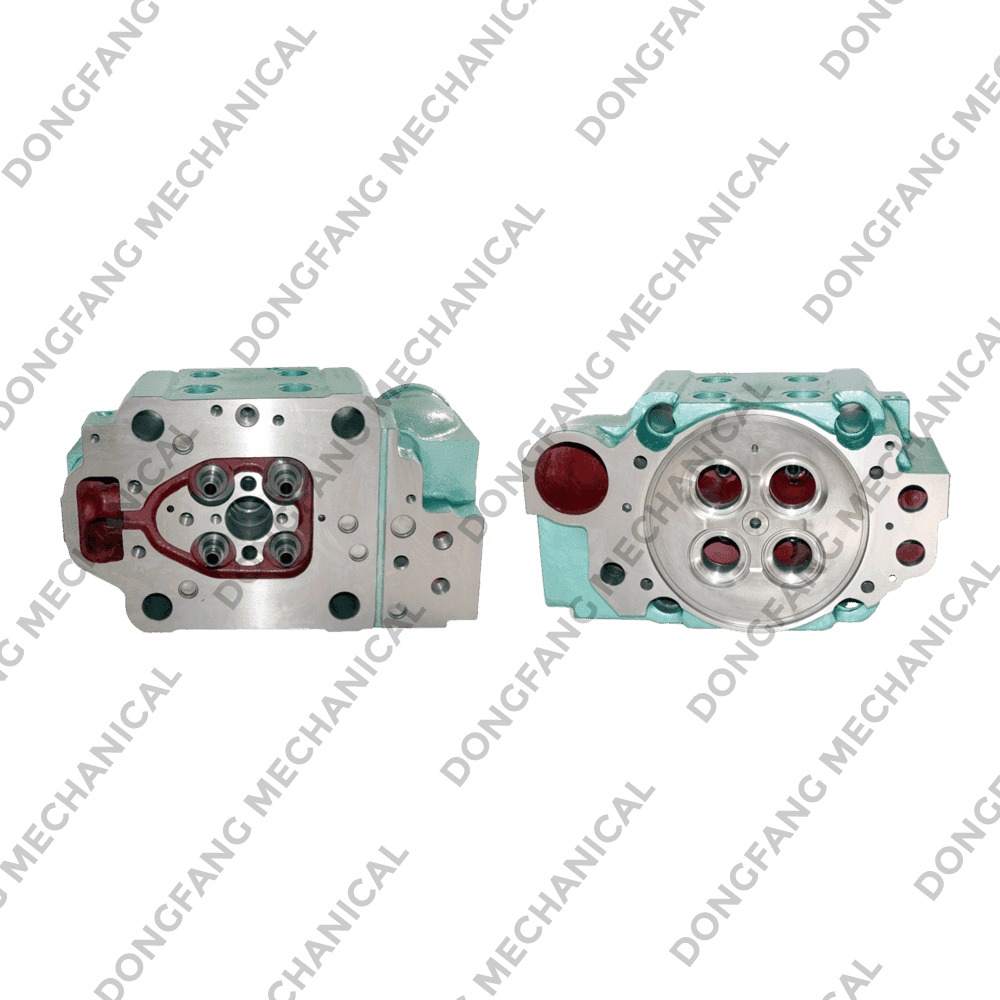
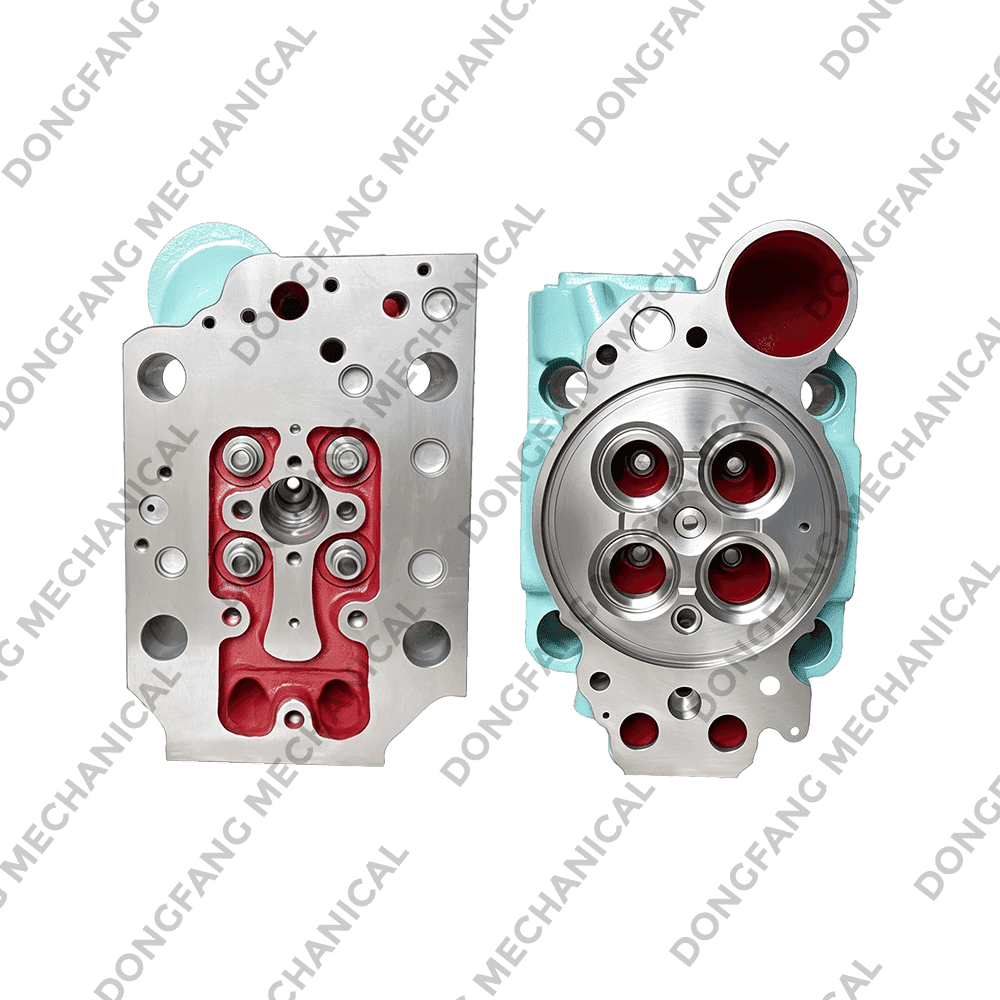
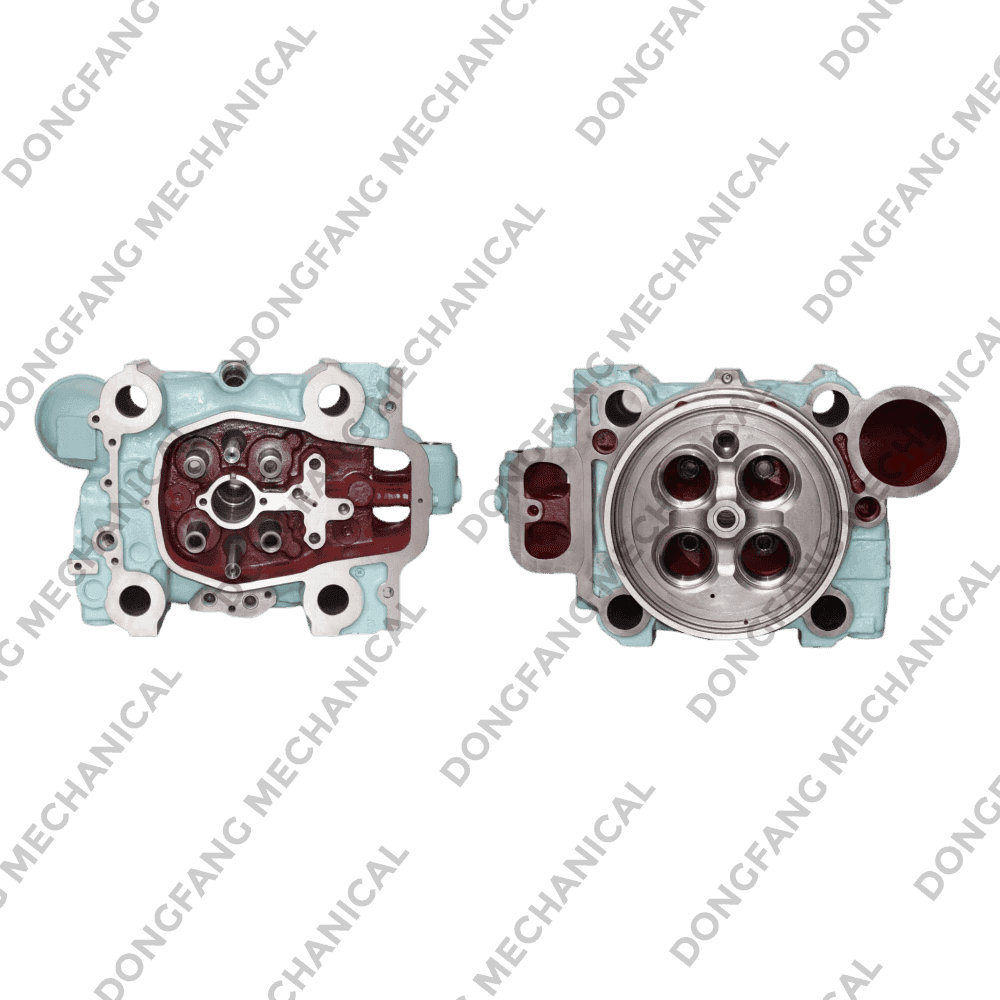
A four stroke cylinder head is a single casting that has to contain the fire deck, two or four valve ports, the injector bore and a network of cooling passages. For a general look at the part and the surfaces that matter during inspection, this explanation of what a cylinder head is covers the basics.
In service, the metal on the fire deck side can reach three or four hundred degrees Celsius while the water side stays close to ninety degrees. Every load change pushes the casting through that gradient, and after several thousand running hours the consequences show up in predictable places:
- Valve seats sink into the head, so the valve sits deeper and the tappet clearance closes up.
- Cracks appear between two seats, or between a seat and the injector sleeve.
- Cooling passages pit and corrode, most often beside the exhaust valve.
- Injector seals fail, letting fuel into the cooling water or water into the cylinder.
- The fire deck distorts, which breaks the gasket seal.
- Head bolt threads stretch or strip in the block.
None of these problems announce themselves quietly. A dropping compression reading, rising exhaust temperature on one cylinder, bubbles in the expansion tank or a small drop in coolant level are the usual first signals.
Repair or Replace the Cylinder Head
The conclusion first: if a four stroke marine cylinder head has cracks between the valve seats, or needs more than two seat inserts replaced with heavy seat recession, replacement is usually cheaper than welding and re-machining, and far less risky. If it is a routine overhaul where valves, guides and seats simply need renewing, repair still makes sense.
For an individual head, these conditions normally tip the balance toward replacement:
- Fire deck flatness outside the maker limit, which is often measured in fractions of a millimetre.
- Leakage from the cooling cavity during a hydrostatic pressure test.
- Cracks between seats or adjacent to the exhaust valve.
- An injector bore that is no longer round, or damaged threads.
- A casting that has already been repaired two or three times.
Sourcing risk belongs in the same calculation. A reworked head means extra machining time, a second set of gaskets and another crane lift, and a vessel waiting alongside costs more per day than a new replacement casting.
Ordering a Replacement Cylinder Head for a Four Stroke Engine
A replacement cylinder head is a compatible part made to original dimensions, not an original equipment part. In practice that means the engine model on the nameplate is not enough. The order needs a set of measurements and identifiers before anything is cut or shipped.
- Engine brand, model and serial number.
- Duty, generator or propulsion, because valve arrangement can differ inside one engine family.
- Number of valves, valve head diameter and valve stem diameter.
- Injector type and injector sleeve dimensions.
- Position and pattern of the cooling water holes.
- Fire deck thickness and overall head height.
Documentation and lead time matter just as much. Ask for a material certificate, a pressure test report and a dimensional inspection record, and confirm how the part is packed, because an unprotected fire deck will not survive a long sea freight leg. For a supply range organised by engine brand, see the cylinder head replacement spare parts catalog.
Matching Cylinder Heads by Engine Brand
Cylinder heads are rarely interchangeable across brands. A casting for one maker and a casting for another share bolt holes and little else, which is why ordering by brand and model is the practical route.
Medium speed engines from MAN are common on ferries and tugs, and their heads usually carry four valves with closely packed cooling passages, so the water side geometry is the hardest part to reproduce correctly.
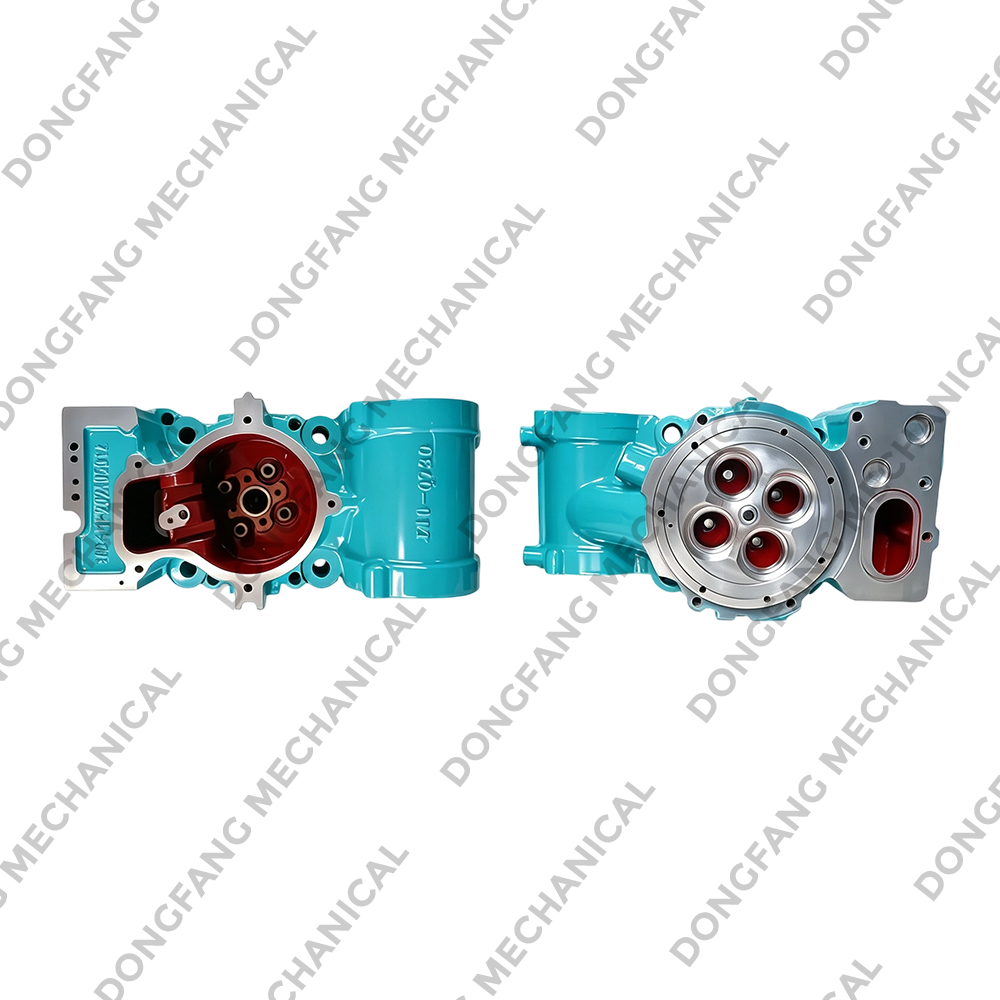 DONGFANG Cylinder Head | Replacement Spare Parts Compatible with MAN Marine Diesel EnginesCompatible Models: L16/24, L23/30, L23/30H, L28/32A, S26MC, L31, L35MC, S35MC, L50MC-C I. Product Overview DONGFANG cylinder heads are third-party compatible replaceme...View Product →
Yanmar engines appear everywhere on fishing boats and small coastal vessels, from a few tens of kilowatts up to a few thousand, and their cylinder heads are often replaced during top end overhauls rather than full rebuilds.
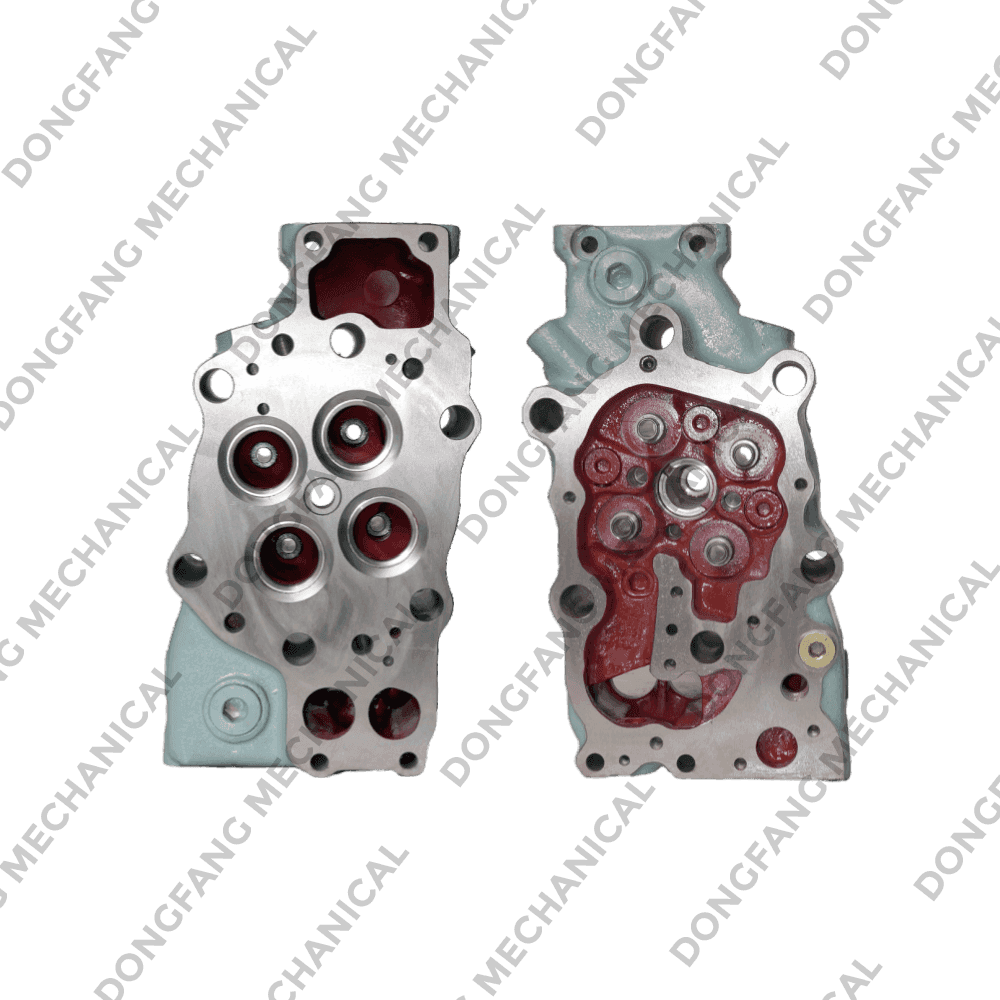 DONGFANG Cylinder Head | Replacement Spare Parts Compatible with Yanmar Marine Diesel EngiCompatible Models: NY160, N165, N180, EY180, N210, EY220, N260, EY260, N280A, N330, S165, S185, M200L, M220L, RAL170, MAL220, UAL200UT, T240, T260, Z280DT, Z280ET, MF2...View Product →
Daihatsu medium speed units are widely used for auxiliary power, and a mismatched head here shows up quickly as uneven exhaust temperature across the cylinders.
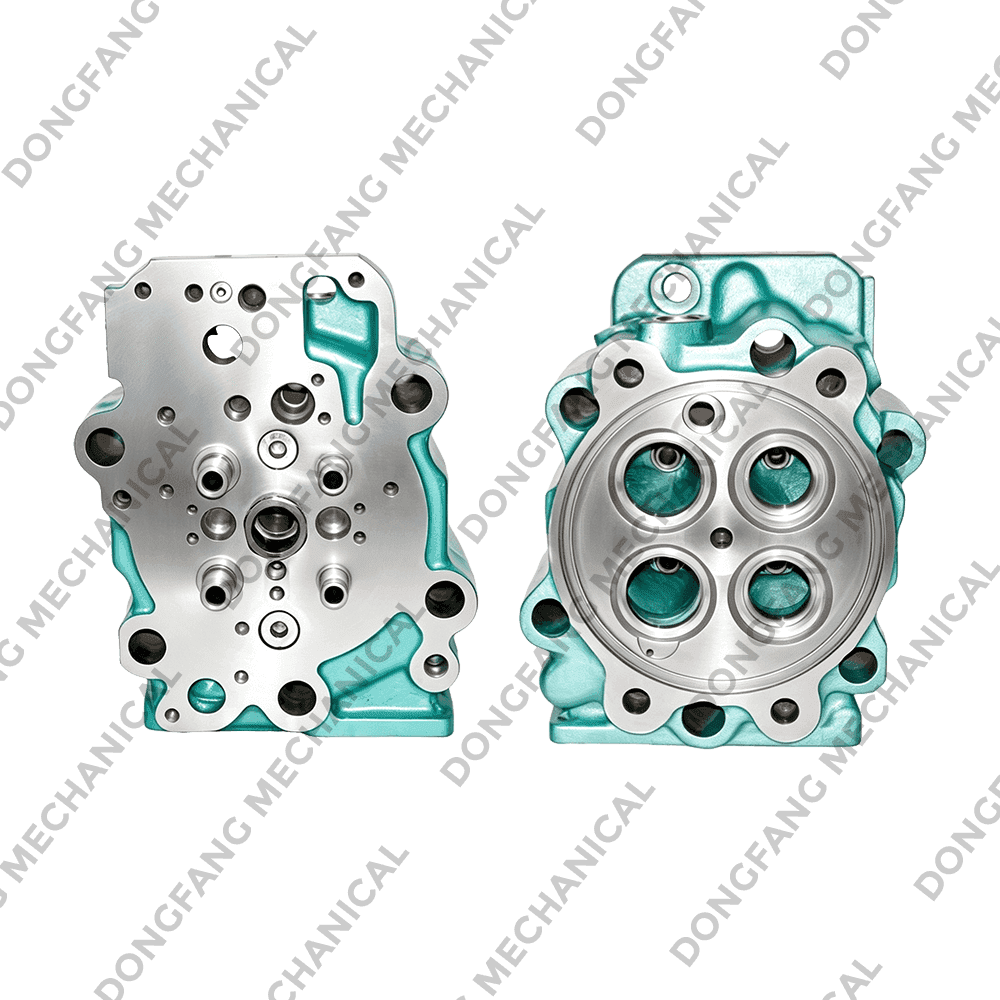 DONGFANG Cylinder Head | Replacement Spare Parts Compatible with Daihatsu Marine Diesel EnCompatible Models: DL-20、DL-22、DL-26、DL-28、DL-32、5DK-20、6DK-20、DK-28、DS-26、PS-26H (D)、DC-17、DE-18View Product →
Similar replacement heads are supplied for other marine engine families, including Akasaka, Kobe, MaK, Makita, Wartsila, Hanshin and Niigata patterns, as well as for domestic Chinese diesel engines used in generator and pumping duties.
Installation and Sea Trial Checks
Fitting the head correctly decides whether the replacement lasts as long as the original. Work through these steps in order:
- Compare the new casting against the old head or the drawing before cleaning anything, checking water hole positions, deck thickness and injector bore.
- Clean the block threads, inspect head bolts for stretch, and replace any bolt that has yielded.
- Fit a new gasket the right way round, checking oil and water passages, and avoid sealant unless the maker specifies it.
- Tighten the head bolts in the stated sequence and stages, using a calibrated torque wrench and, where specified, an angle gauge.
- Set valve clearances cold and note the values so they can be rechecked hot.
- Fill and vent the cooling system, then check for leaks at the head joints and around the injector sleeves.
- Run the engine unloaded first, then under load, watching exhaust temperature, jacket water outlet temperature and crankcase pressure for any cylinder that behaves differently from the rest.
Retorquing after the first few hours of running is still standard practice on many medium speed engines, even where the manual does not demand it. It costs an hour and prevents a much more expensive failure later.
The four stroke cycle has not changed in a century and the reasons cylinder heads fail have not changed either. What changes is how easy it is to find a replacement that matches the original dimensions, the original water passages and the original material. Put the brand, model and measured data together before ordering, spend the time to confirm fire deck dimensions and cooling geometry, and the vessel keeps its schedule.