عربى

Content
A 400 kW generator set passes 10,000 running hours, the head gasket starts to weep along the exhaust side, and the maintenance team discovers that this is a Tier IV Final unit whose cylinder head costs noticeably more than the Tier III version of the same displacement. The machine is still worth repairing. The real question is what a correct replacement head has to meet.
The short answer: Tier IV Final cut particulate matter and oxides of nitrogen by roughly 90 percent against Tier III, and engine builders reached those figures with higher injection pressure, cooled exhaust gas recirculation, retarded combustion and exhaust aftertreatment. Every one of those changes raises the heat, the pressure and the dimensional precision that the cylinder head has to survive. A head for a Tier IV engine therefore deserves stricter checking than one built for a mechanically injected engine, and a casting listed for a given displacement does not automatically suit the Tier IV version of that engine family.
What Tier IV Actually Requires
Tier 4 is the United States EPA emission standard for nonroad diesel engines, meaning engines fitted to off-highway machines such as excavators, wheel loaders, generator sets and agricultural tractors. It arrived in two steps. Tier 4 Interim ran from 2008 to 2012 depending on the power band, and Tier 4 Final followed from 2014 to 2015. When people say Tier IV diesel engines, they usually mean the final step. The European Union adopted near-identical limits under Stage IV.
| Standard | NOx | PM | Typical control approach |
|---|---|---|---|
| Tier 2 | 6.0 | 0.20 | Mechanical or early electronic injection, combustion tuning |
| Tier 3 | 4.0 | 0.20 | Electronic injection, higher pressure, revised piston bowl |
| Tier 4 Final | 0.40 | 0.02 | Common rail, cooled EGR, diesel particulate filter, selective catalytic reduction |
Two details matter when buying parts. First, the rule governs new engines at the point of manufacture; it does not retire machines already in service. Second, Tier 4 Final also limits carbon monoxide at 3.5 g/kWh and non-methane hydrocarbons at 0.19 g/kWh, and the engine has to hold those values across its useful life, confirmed by in-use testing. That is why the aftertreatment package is not an accessory that can simply be removed when it causes trouble.
Marine engines follow a different rule set. International shipping works to IMO Tier II and IMO Tier III, with Tier III applying inside designated NOx emission control areas, while the EPA maintains separate marine categories for larger commercial engines. A marine engine certified to IMO Tier III and a land engine certified to Tier 4 Final are not the same approval, even where the head castings look similar.
What the Standard Does to the Cylinder Head
Emissions limits are met in the combustion chamber first and in the exhaust pipe second, and the cylinder head sits between the two. Four consequences show up in the casting itself.
Higher firing pressure
Common rail injection at 1,800 to 2,500 bar, combined with later and more retarded timing, lifts peak cylinder pressure well above the levels of a mechanically governed engine. The fire deck, the valve bridge and the head bolts have to carry that load without permanent distortion at the gasket face.
More heat in the same space
Retarded combustion raises exhaust gas temperature at the valve and seat. Cooled EGR adds a second heat source and, on many engines, a steady supply of soot that settles in the intake ports and around the valve stems. Designers answer with thicker decks, revised coolant cores, hardened or inserted valve seats and, on the hardest working engines, higher alloy exhaust valves.
Less room around the injector
A common rail injector sits in a bore with a copper or steel sleeve, and the sealing face has to hold at very high pressure. A head that measures correctly at the fire deck but is slightly off at the injector bore will pass combustion gas or coolant within a few hundred hours.
No tolerance for coolant neglect
Greater heat rejection means the coolant passages carry more load. Scale, residual casting sand or a core shift that narrows one passage can create a hot spot and crack a valve bridge long before the scheduled overhaul.
Why So Many Heads Still Go Into Pre-Tier Engines
Most cylinder head orders in the marine and industrial aftermarket are not for Tier IV machines at all. They are for engines built in the 1980s and 1990s that still work every day on ferries, tugs, fishing vessels and standby generator sets. Tier standards apply to new build, so an older engine stays in service as long as it can be repaired economically, and a replacement cylinder head is normally a fraction of the cost of a new Tier IV unit. There is also no particulate filter or SCR system to maintain.
This is why replacement spares are matched to an engine family by brand and model rather than by emission tier. The owner of a mechanically injected auxiliary engine wants a head that bolts on, seals and runs. The owner of a Tier IV Final machine wants the same thing, plus documented material and dimensional control, because the consequences of a poor fit are more expensive on a high pressure engine.
What to Verify Before a Replacement Head Goes On
Whether the engine is twenty years old or four years old, a short inspection list catches most of the problems that show up after installation.
- Material certificate. Confirm the grade and the batch, and compare it with the specification for that engine family rather than accepting a general cast iron description.
- Fire deck flatness. Check across the full length and diagonally, using the tolerance stated in the engine maker manual. A typical figure is within 0.05 mm, but the manual governs.
- Valve seat condition. Look for seat width, concentricity and hardness, and confirm the insert material suits the fuel and load profile.
- Pressure test. A water jacket test at 0.3 to 0.4 MPa held for ten minutes should show no drop and no seepage at the core plugs.
- Injector bore and sleeve. Verify bore diameter, depth and concentricity, and check that the sealing face is clean and square.
- Valve recession margin. New valves should sit within the usable adjustment range, leaving room for later grinding.
- Port and passage cleanliness. Loose core sand in a water passage is a common cause of local overheating on a freshly built engine.
Matching the Head to the Engine Family
Compatibility is decided by the engine family and the build plate, not by the badge on the machine. Two engines sharing a displacement can differ in valve size, injector position, coolant core layout and deck thickness between an older and a later build. Before ordering, note the engine model, serial number and the arrangement number where one exists, and compare them with the listing. A full overview of the ranges we hold is available in the cylinder head catalog, organised by the engine brand each head is built for.
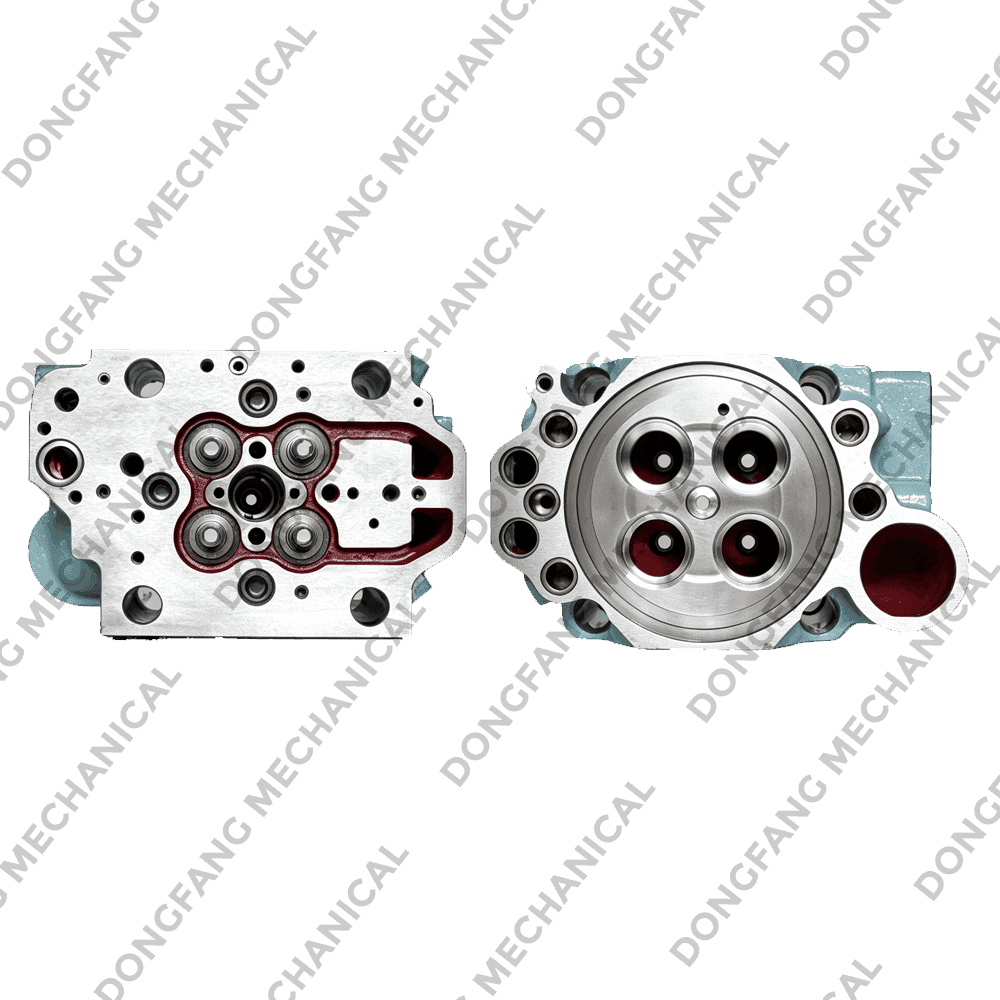
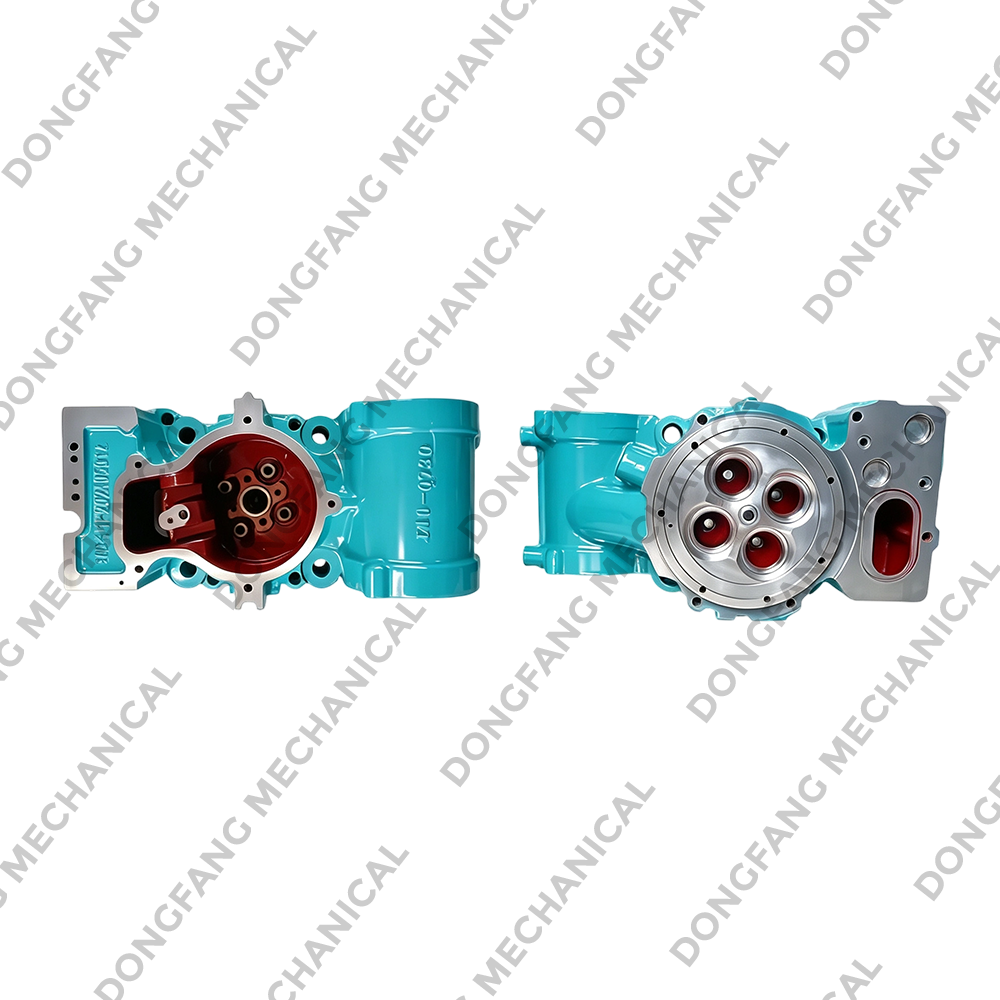 DONGFANG Cylinder Heads for MAN Marine Diesel EnginesAftermarket replacement heads for listed MAN models, with gray cast iron or compacted graphite iron options and model-based fitment checks.View Product →
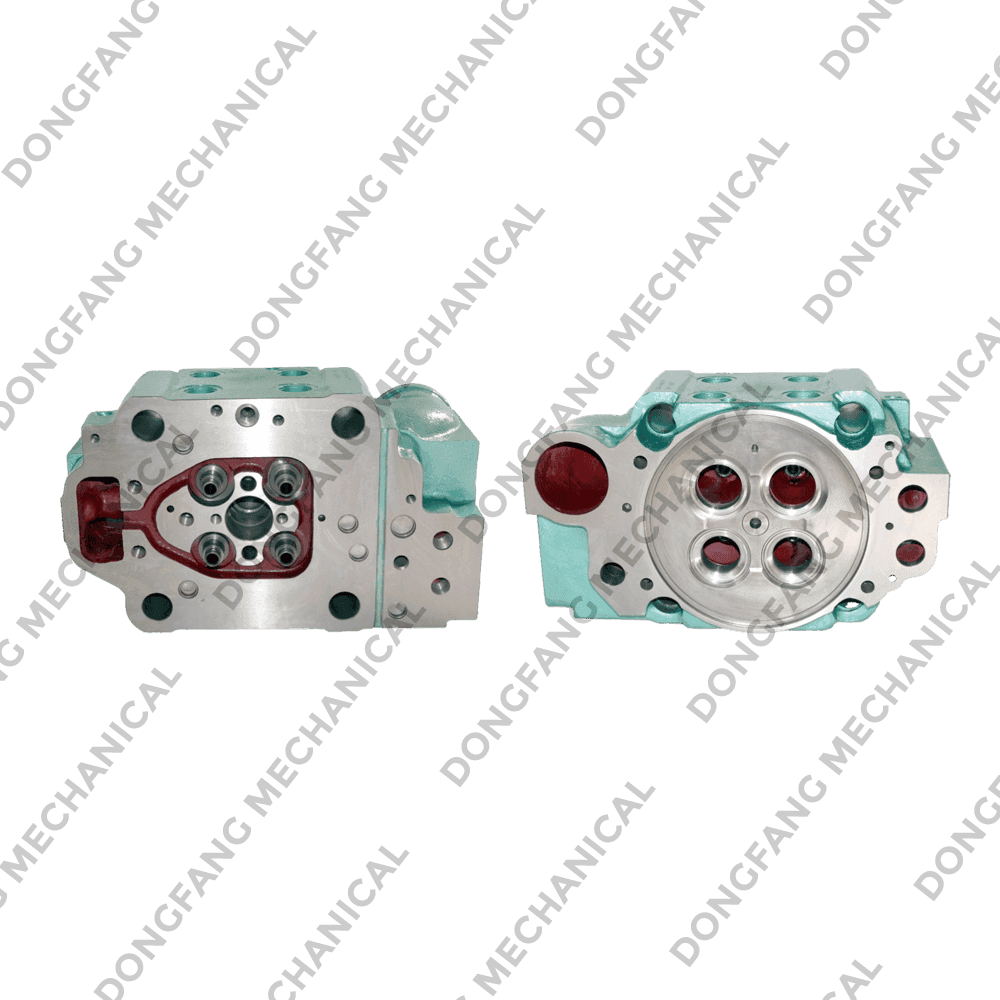
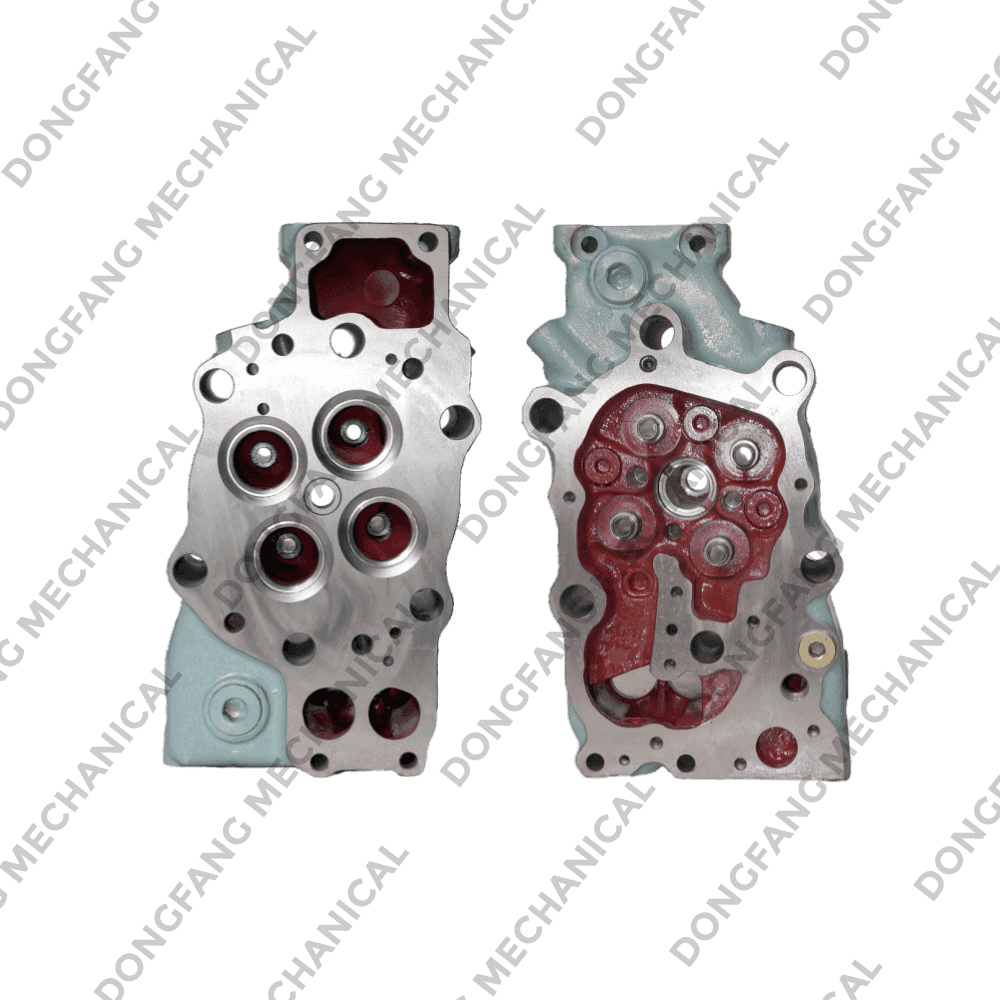 DONGFANG Cylinder Heads for Yanmar Marine Diesel EnginesAftermarket replacement heads for listed Yanmar models, offered in gray cast iron or compacted graphite iron for maintenance and failure replacement.View Product →
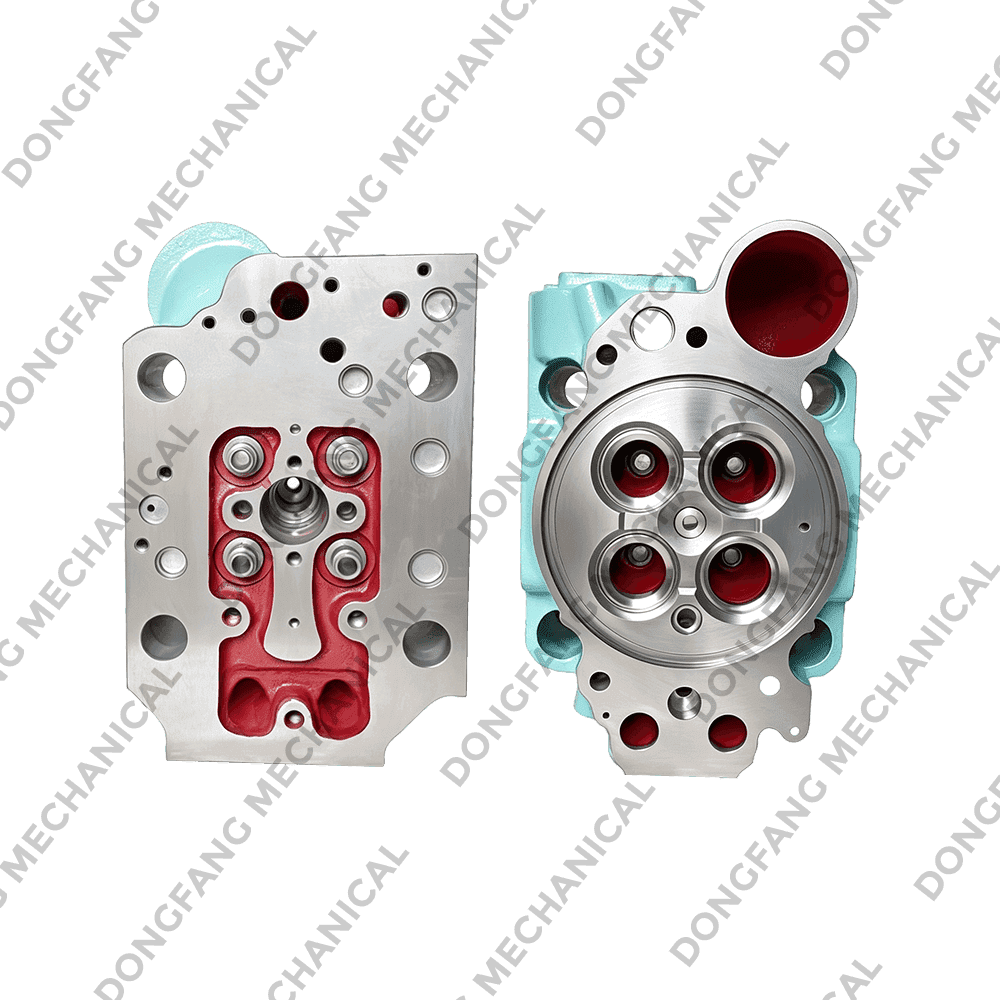
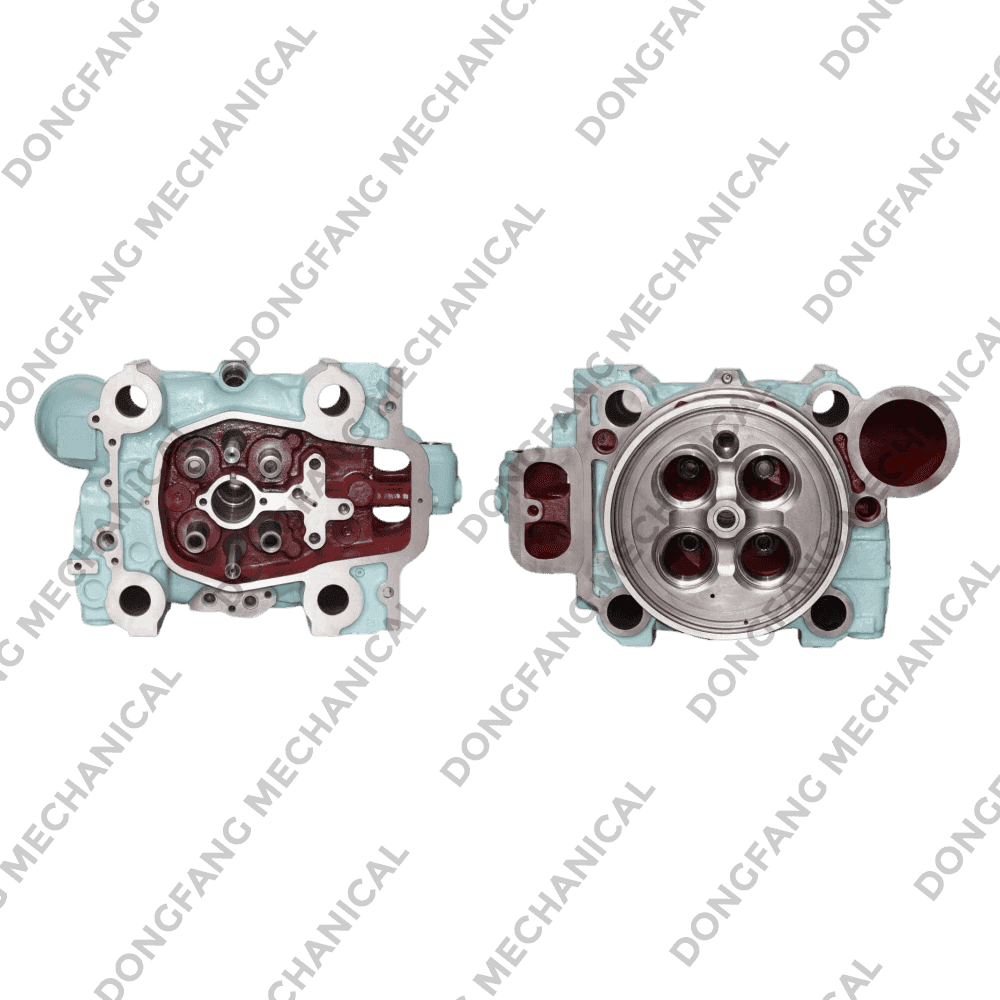
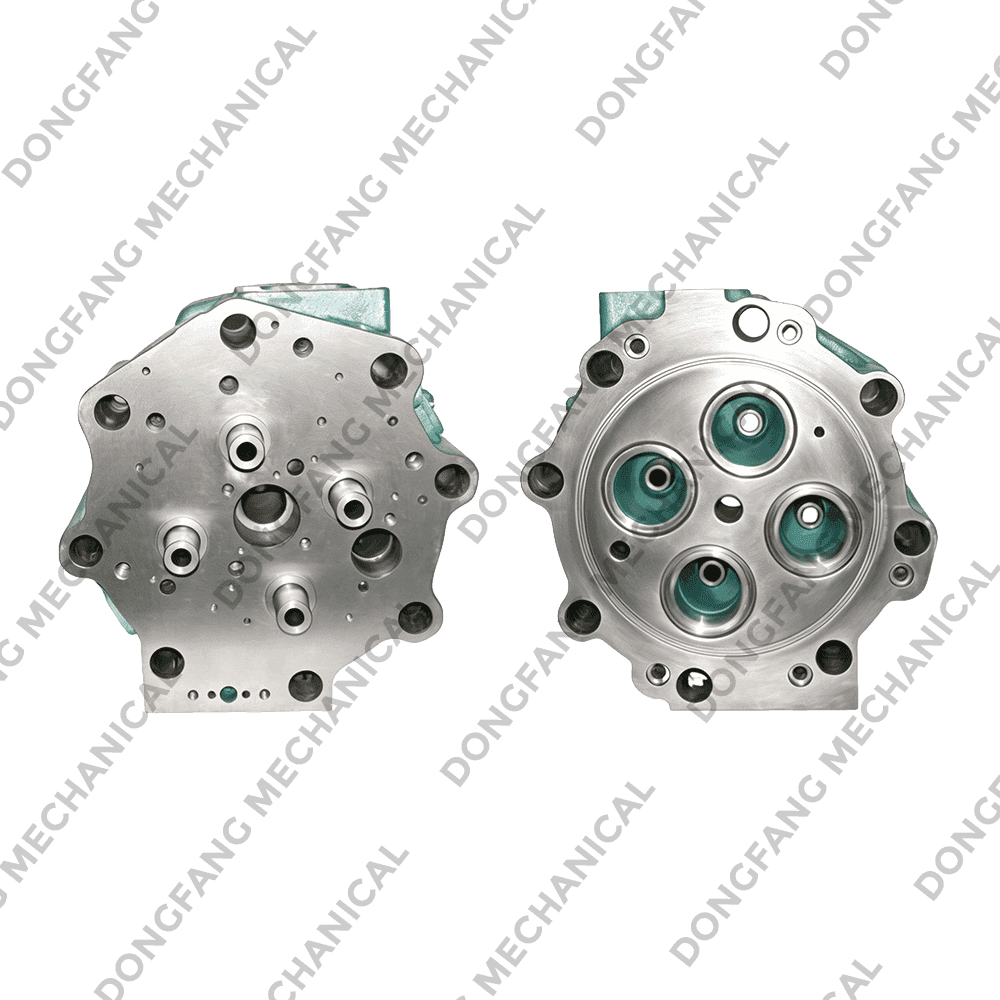 DONGFANG Cylinder Heads for Domestic Diesel EnginesAftermarket replacement heads for listed domestic engine models, with gray cast iron or compacted graphite iron options for marine and industrial power units.View Product →
Where a vessel runs a mix of imported main engines and domestic auxiliary units, ordering both patterns together usually shortens the yard stay, since the two heads can be checked and prepared in one pass.
Planning the Interval Instead of Reacting to the Failure
A head rarely fails without warning. Valve clearance that closes up faster than the manual predicts, coolant that turns dark or smells of exhaust gas, rising exhaust temperature at constant load and a bubbling expansion tank all appear long before a crack opens. Recording valve clearance at every adjustment and comparing the figures between cylinders gives a useful trend line, and it costs almost nothing.
Coolant chemistry is the other quiet factor. Nitrite depletion, a glycol concentration that has drifted, or a top-up with hard water will erode a liner and, in time, load the head with heat it was never designed to reject. For general background on how the casting is built and what wears first, this note on what a cylinder head is covers the main features and the typical wear points.
Tier IV changed the engine, and the cylinder head changed with it: thicker decks, tighter injector bores, better seat materials and less tolerance for a cooling system that has been neglected. For a Tier IV Final machine, that means buying a head that comes with material and dimensional evidence. For a twenty-year-old marine engine, it means buying a compatible replacement that fits the family it was built for and keeps a working vessel earning. Both cases reward the same discipline, which is confirming the specification against the engine before anything is unbolted.