عربى

Content
- 1 What the Turbocharger Actually Does to a Marine Engine
- 2 Two-Stroke and Four-Stroke Turbocharging: Different Loads, Different Heads
- 3 Why the Turbocharger Matters When You Buy a Replacement Cylinder Head
- 4 Matching the Head to the Engine, Not Just the Brand
- 5 Brand Specific Replacement Cylinder Heads
- 6 Symptoms That Tell You Which Component to Inspect First
- 7 Procurement Practicalities and Final Checks
A chief engineer calls from the wharf. The auxiliary engine on a twenty year old coaster is losing compression on one unit, exhaust temperature at the same load is up by around forty degrees Celsius, and the exhaust valve clearance has closed up twice in two months. The turbocharger was overhauled last year. The cylinder head was last replaced long before that. Which part do you blame?
The short answer is that on a turbocharged marine diesel, the turbocharger and the cylinder head share one thermal budget. A fault in one almost always leaves marks on the other, and replacing the head without understanding the boost side of the engine is how workshops end up fitting the same part twice. So when you buy a replacement cylinder head, the question is not only which engine brand, it is which boost level, which valve trim and which cooling configuration.
What the Turbocharger Actually Does to a Marine Engine
A marine turbocharger takes energy that would otherwise leave through the exhaust manifold, spins a turbine with it, and uses the shaft to drive a centrifugal compressor. The compressor raises charge air pressure before the air enters the cylinder, and a charge air cooler then brings the density back up by removing the heat of compression. The result is more oxygen mass in the same swept volume, which allows more fuel to be burned and more power to be produced from an engine of the same size and weight.
The consequence for the cylinder head is straightforward. Higher charge air pressure means higher peak cylinder pressure and higher combustion temperature. The fire deck, exhaust valves, valve seats and the cooling passages around them all run hotter and under greater mechanical load than on a naturally aspirated version of the same engine. That is why the same nominal engine family can use different head castings, different seat insert materials and different valve materials depending on whether it is turbocharged, and on how hard the turbocharger is working.
Two-Stroke and Four-Stroke Turbocharging: Different Loads, Different Heads
Large two-stroke crosshead engines and medium speed four-stroke engines both use turbochargers, but the way the air reaches the cylinder and the way the head is built are quite different. The table below summarizes the distinctions that matter when you are sourcing a replacement cylinder head.
| Parameter | Two-stroke crosshead engines | Four-stroke medium and high speed engines |
|---|---|---|
| Turbocharger arrangement | One or more large axial turbines, often constant pressure or pulse systems, wastegate rarely used | Usually pulse turbocharging with one unit per bank, wastegate or variable geometry on some high speed models |
| Scavenging method | Uniflow scavenging, air enters through liner ports and leaves through one central exhaust valve in the cover | Camshaft driven inlet and exhaust valves, two or four per cylinder |
| What the head carries | Exhaust valve, valve cage or seat ring, fuel injector, indicator and starting air connections | Valve guides, seats, injector sleeve, rocker pedestals and cooling passages |
| Typical heat related damage | Exhaust valve and seat burning, cage cracking, cracks between valve and injector bores | Seat recession, guide wear, cracks between valve seats, injector sleeve leakage |
| Details to verify on order | Valve cage type, exhaust valve material, cooling water connection pattern | Bore and stroke, aspiration version, valve seat angle, injector type |
The practical point is that a cylinder head for a turbocharged engine is not interchangeable with the head for the naturally aspirated version of the same model. Valve material, seat angle and cooling jacket geometry can all differ, and the part number stamped on the original head is a more reliable guide than the engine nameplate alone.
Why the Turbocharger Matters When You Buy a Replacement Cylinder Head
Three failure patterns connect the two components, and all three affect how you specify the replacement.
- Overboost and high exhaust temperature. A sticking wastegate, a fouled compressor wheel or a blocked charge air cooler raises combustion temperature, and the exhaust valve and seat take the damage first.
- Oil and carbon migration. A turbine side seal failure pushes oil into the exhaust or the intake, and carbon build up on the valve stem and seat accelerates guide wear.
- Mismatched turbocharger. Fitting a turbocharger from a different rating raises boost beyond what the original head and valve trim were designed for, and seat burning returns within a few thousand running hours.
For buyers, the conclusion is simple: record the turbocharger model and the rated boost of the engine before ordering a head, and pass that information to the supplier. A supplier who asks only for the engine brand is guessing.
Matching the Head to the Engine, Not Just the Brand
Marine diesel engines are built in many ratings from the same basic platform, and the cylinder head is one of the parts that changes between them. Before you send an enquiry, collect the following:
- Engine brand, type designation and the serial or specification number from the engine plate.
- Aspiration version, meaning naturally aspirated, turbocharged, or turbocharged and aftercooled.
- Bore, stroke and number of cylinders, since some families share a head across several outputs and others do not.
- Valve configuration, including seat angle, valve cage type where used, and whether the head carries the injector sleeve.
- Cooling layout, such as the number and position of water transfer holes and the shape of the joint face.
- The original part number stamped or cast on the head, plus photographs of the fire deck and the exhaust port face.
This information is what separates a first time fit from a returned casting. On a turbocharged engine the tolerance for a wrong seat insert material or a misaligned water passage is small, and the damage shows up as overheating or leakage rather than as an obvious dimensional mismatch.
Brand Specific Replacement Cylinder Heads
Replacement heads are normally organized by the engine brand they are compatible with, because the casting, valve gear and cooling layout follow the original design. For turbocharged installations, confirm the rating of your engine against the product page before ordering.
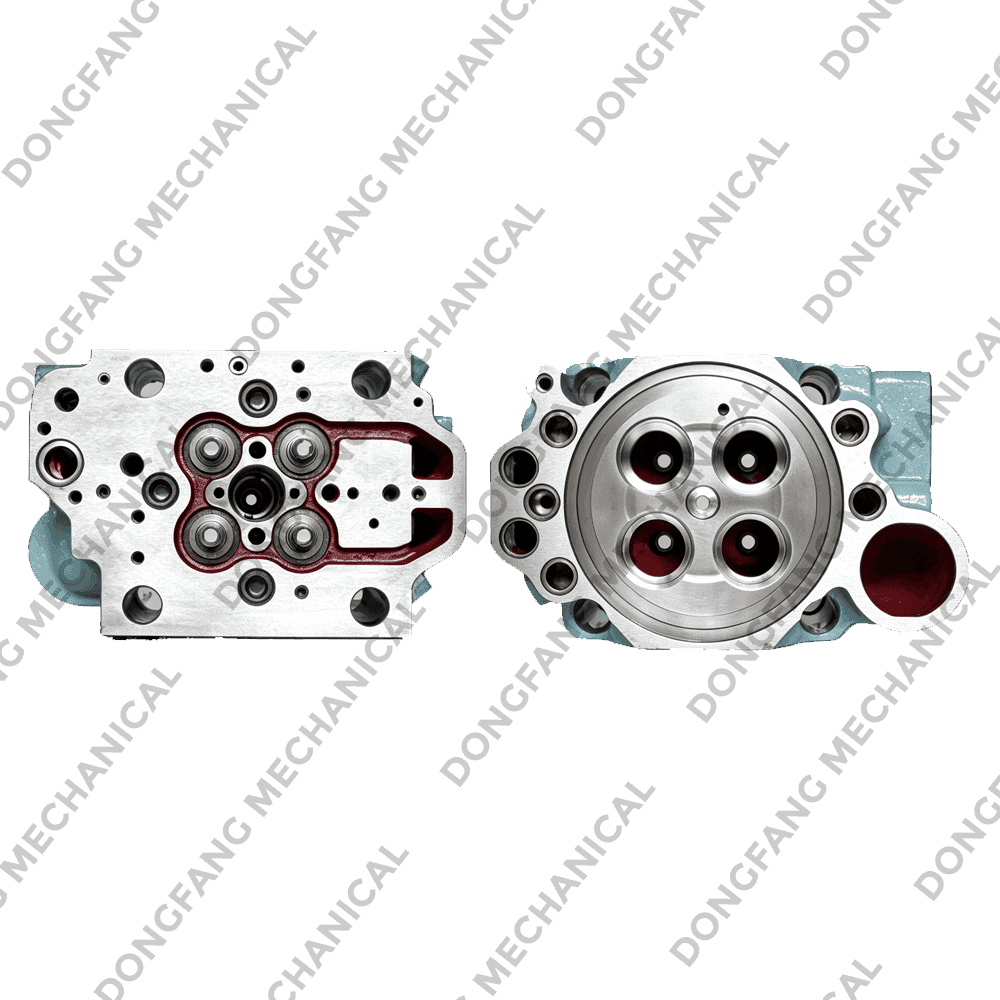
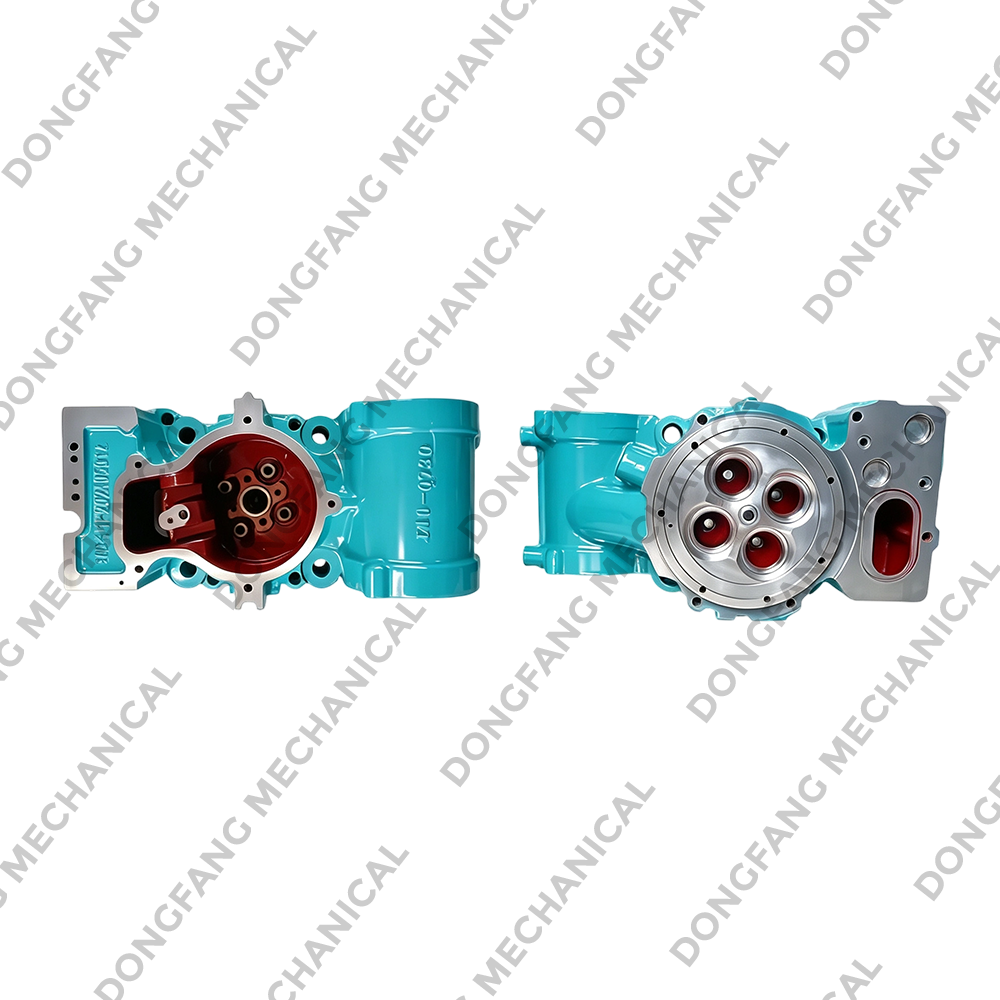 DONGFANG Replacement Cylinder Heads for MAN Medium-Speed EnginesView compatible MAN engine models and material options to match turbocharged or aftercooled installations and confirm the correct replacement head.View Product →
Four-stroke medium speed engines from this family are frequently turbocharged and aftercooled, so the aspiration suffix on the engine plate matters when selecting the correct head.
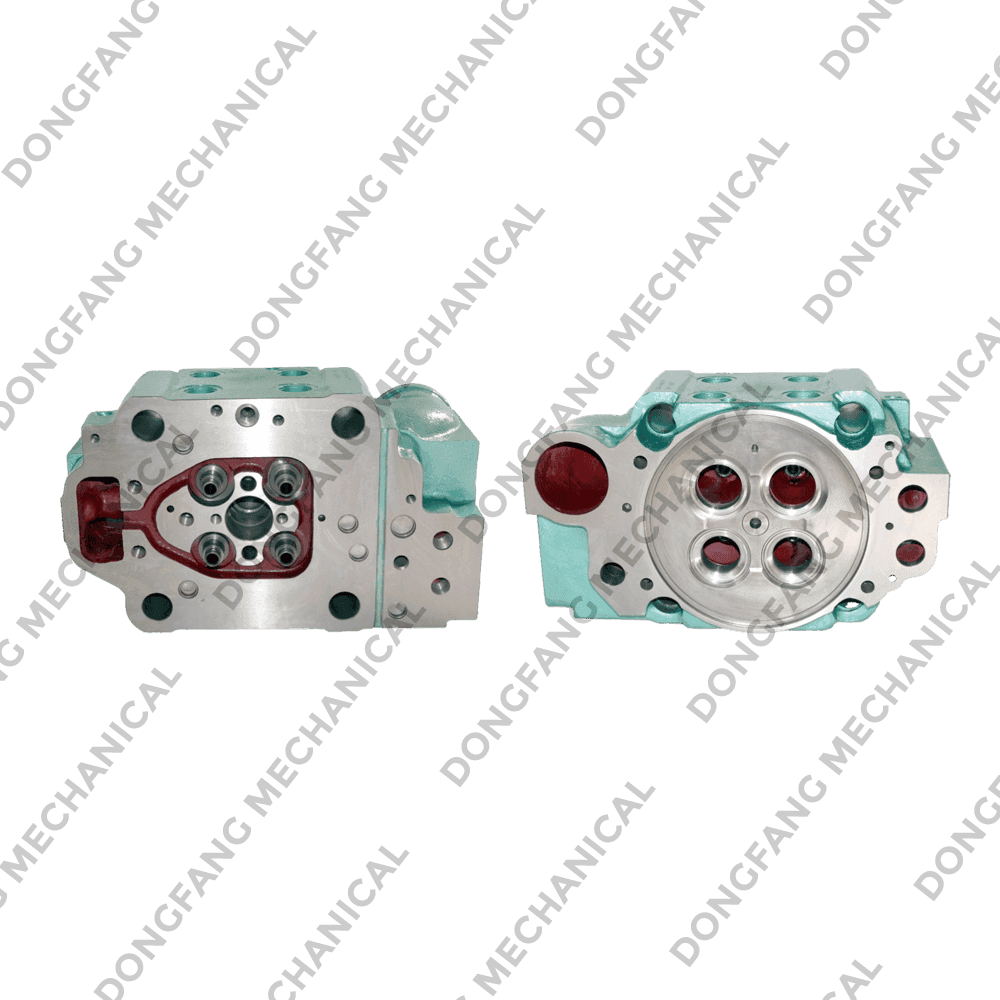
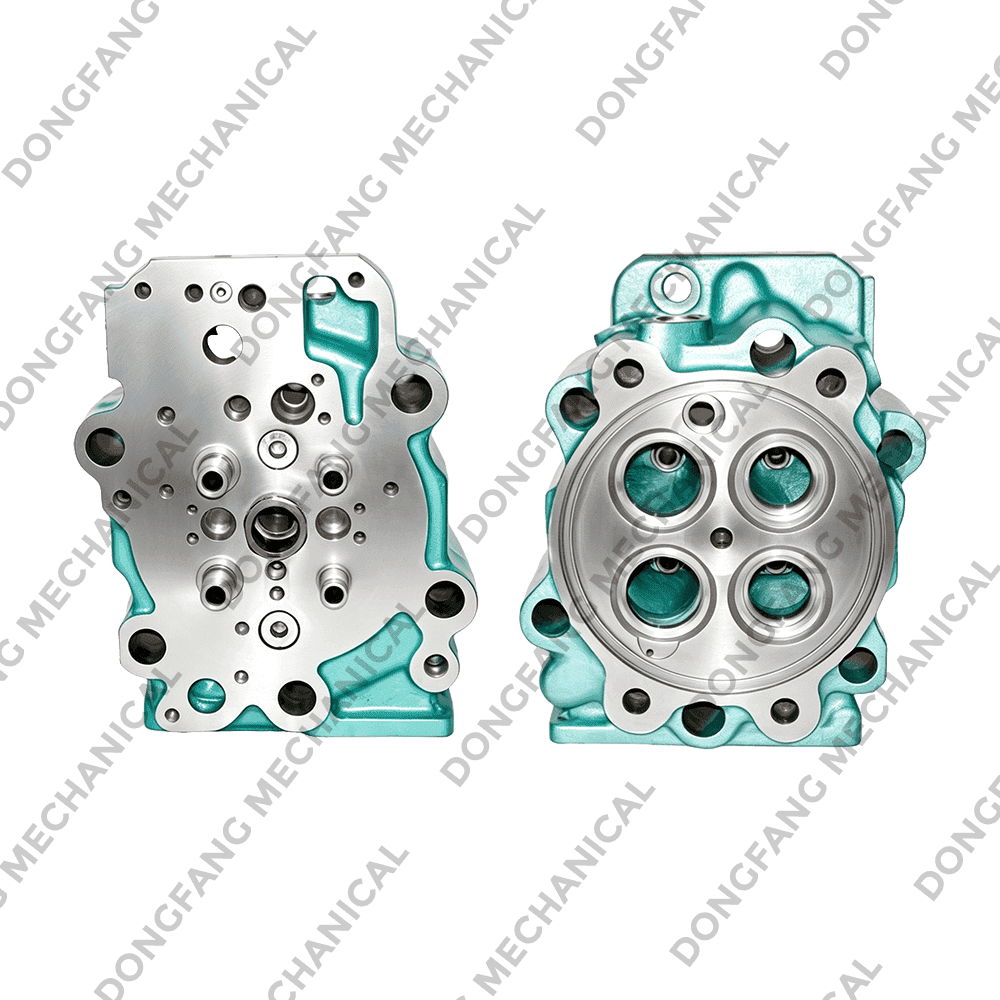 DONGFANG Cylinder Heads for Daihatsu Marine Diesel EnginesReview Daihatsu-compatible models and gray or compacted graphite iron options for auxiliary and small propulsion engines with long running hours.View Product →
These units are common in auxiliary and small propulsion roles, where boost levels are moderate but running hours are high, making valve seat condition the usual reason for replacement.
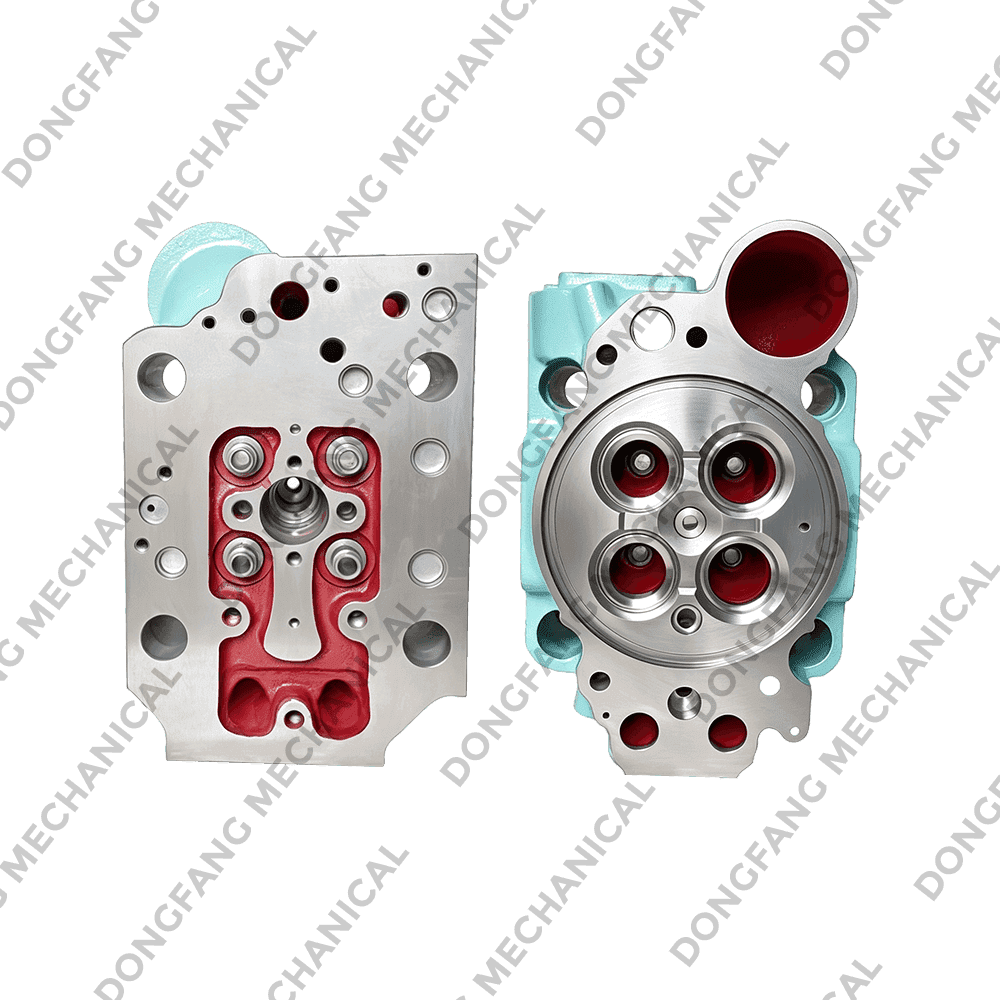
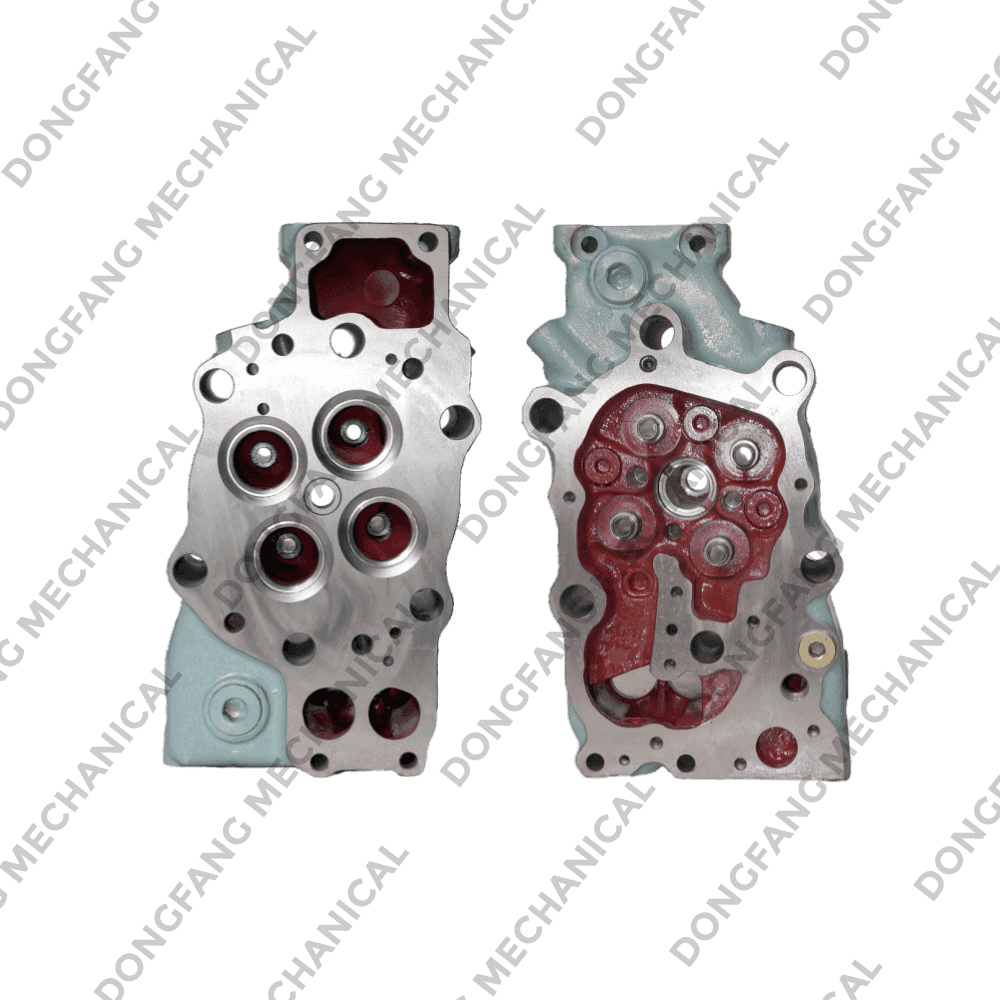 DONGFANG Replacement Cylinder Heads for Yanmar Diesel EnginesCheck Yanmar-compatible models and material choices for auxiliary and industrial engines run at sustained load, where exhaust valve and seat thermal demand is high.View Product →
High speed auxiliaries in this range often run close to rated load for long periods, which puts continuous thermal demand on the exhaust valve and seat.
Symptoms That Tell You Which Component to Inspect First
Before committing to a replacement head, confirm where the fault actually sits. These signs point in different directions:
- Exhaust temperature rising at constant load, with normal boost pressure, usually indicates valve leakage or a partially blocked charge air cooler.
- Boost pressure below the rating while exhaust temperature stays normal points to the turbocharger, its seals or the air intake path.
- Uneven or surging turbocharger whistle with black smoke at part load often means a leaking exhaust valve or a cracked head passing compression into the manifold.
- Coolant loss without external leakage, combined with pressure in the expansion tank, suggests a cracked water jacket in the head.
- Repeated need to adjust exhaust valve clearance indicates seat recession and is a reason to inspect the head rather than the turbocharger.
If two or more of these signs appear together, treat the head and the turbocharger as a single repair scope and plan the work as one job rather than two.
Procurement Practicalities and Final Checks
Replacement castings vary in the finishing work they require, and it is worth agreeing the inspection points with the supplier in writing. Ask for confirmation of valve seat concentricity to the guide, valve recession height against the fire deck, a hydrostatic test of the water jacket, and flatness of the head gasket face. For turbocharged applications, also confirm the valve material grade and the seat insert type, because these are the parts that decide how long the head lasts under boost.
On delivery, check the exhaust port and fire deck faces for corrosion protection residue, verify that the injector bore and sleeve match the original, and keep the packaging until the engine has run through its first load test. A head that fits but runs hot is usually a specification error rather than a machining error, and the earlier it is identified, the cheaper it is to correct.
If you are still building the enquiry, browse the cylinder head catalog to match your engine brand, and read what a cylinder head does for a plain explanation of the components that fail under turbocharged load.