عربى

Content
A two-cylinder auxiliary that suddenly needs long cranking, loses coolant, and sends white vapor out of the exhaust is often suffering from a cylinder head that can no longer seal combustion pressure or hold its cooling jacket. The conclusion first: a 2 cyl diesel engine remains a practical power unit for small boats, gensets, pumps, and compact machinery, but the cylinder head is the part most exposed to vibration, heat, and corrosion. A replacement head is a sound repair when the casting and valve geometry match the engine. It becomes an expensive detour when the part is chosen only by horsepower or by a generic compatible label.
What a 2 cyl diesel engine is and where it fits
A 2 cyl diesel engine is an inline two-cylinder, four-stroke compression-ignition engine. In small industrial and marine service, displacement commonly falls between about 0.5 and 2.0 liters, with outputs around 10 to 40 hp depending on aspiration, speed, and duty rating. The layout is simple: two cylinders share a block and usually a single cylinder head casting, a compact valve train, and a small fuel injection system.
The small cylinder count has real consequences. Most inline-two four-stroke diesels use a 180-degree crank layout, which balances the primary reciprocating forces but leaves a rocking couple. That couple is why engine mounts, flywheel mass, and torsional vibration matter more than they do on a four-cylinder. It also explains why a two-cylinder engine can feel rough at idle yet run smoothly at its rated speed. For maintenance, the compact package is an advantage: one head removal exposes both combustion chambers, and valve clearance checks are straightforward. For diagnosis, however, the shared casting means one crack or warped deck can affect both cylinders at once.
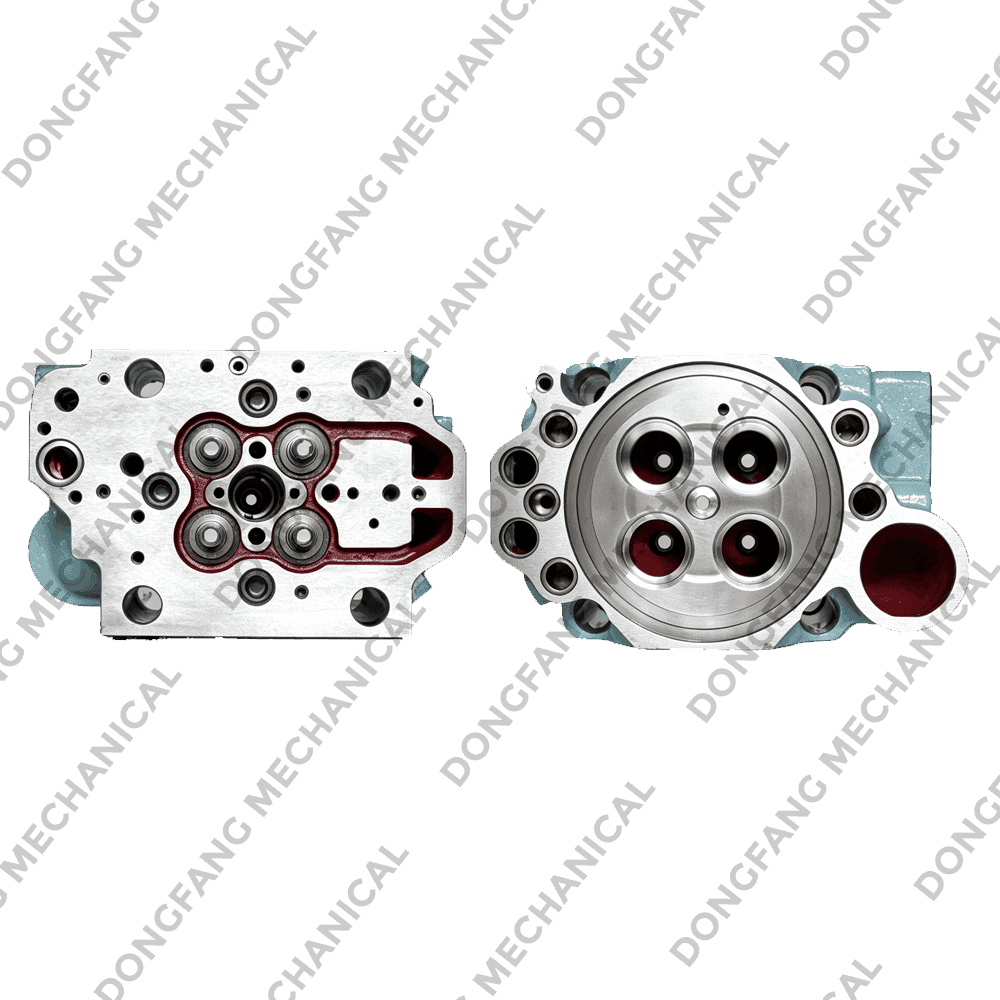
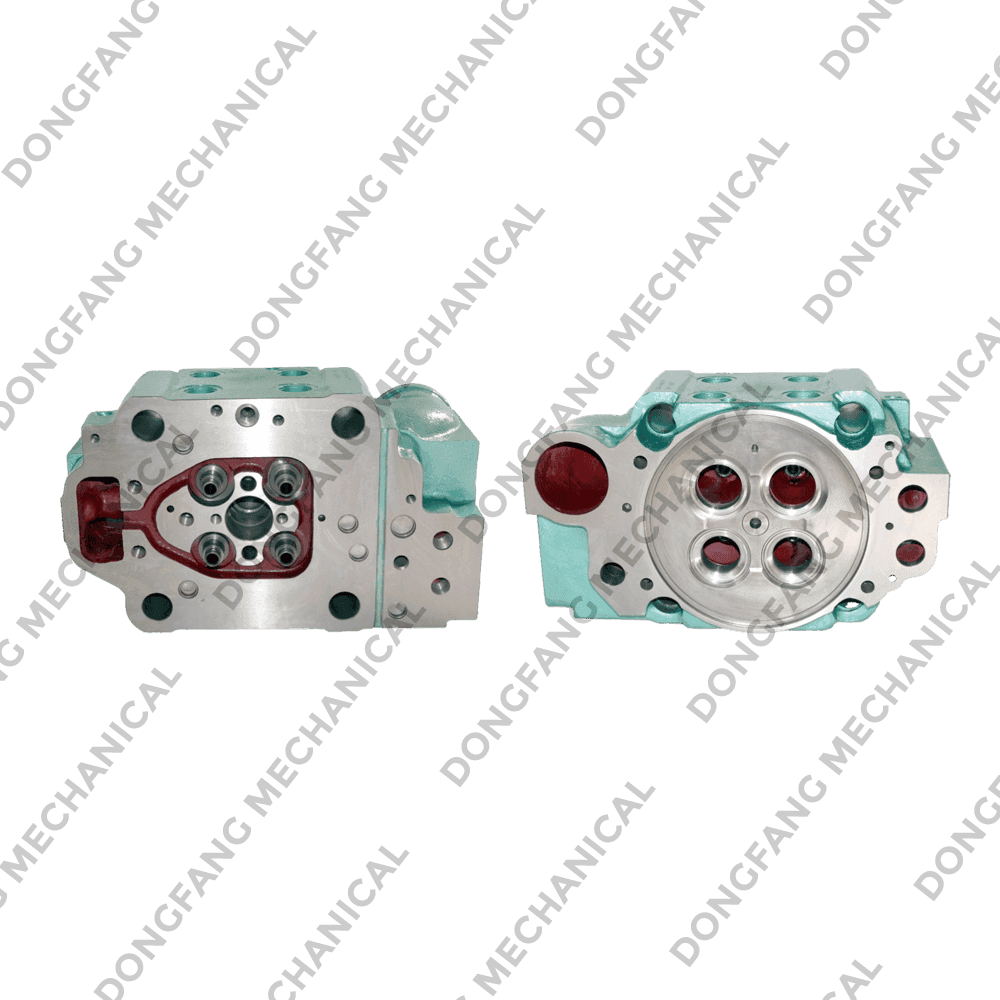
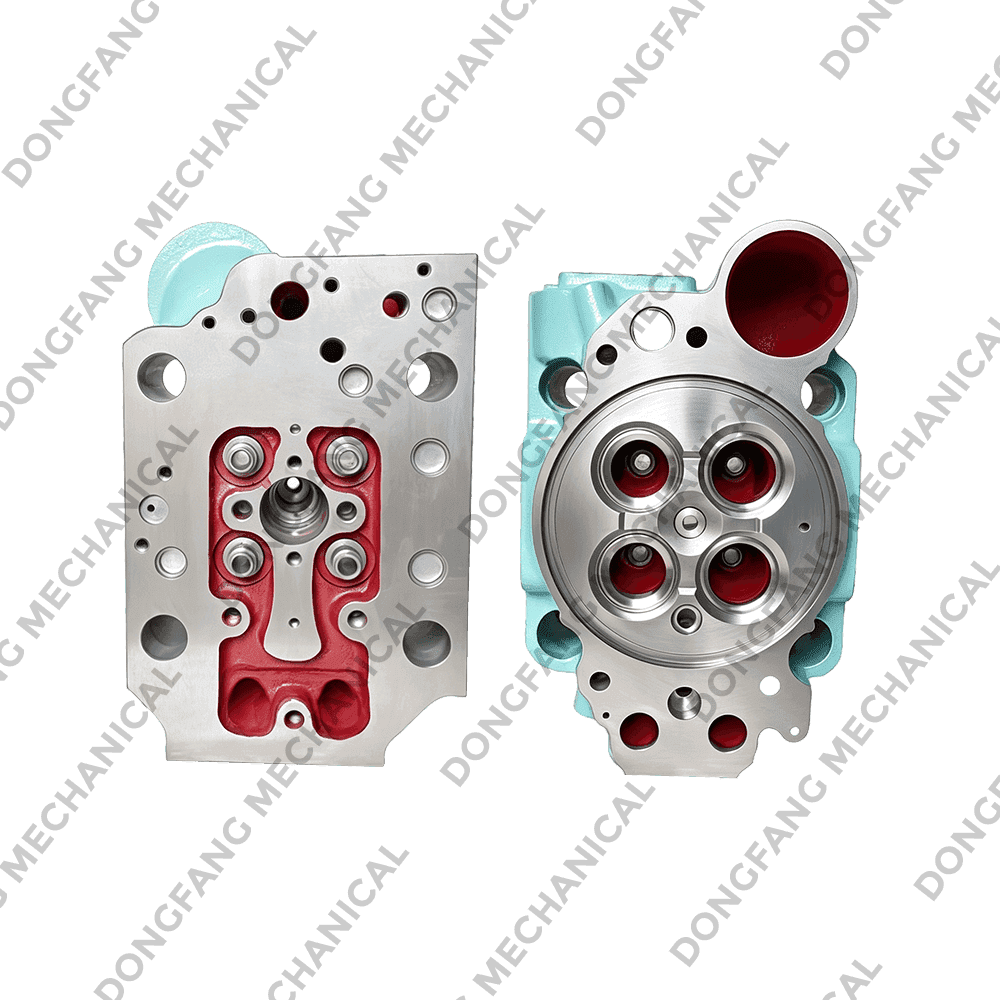
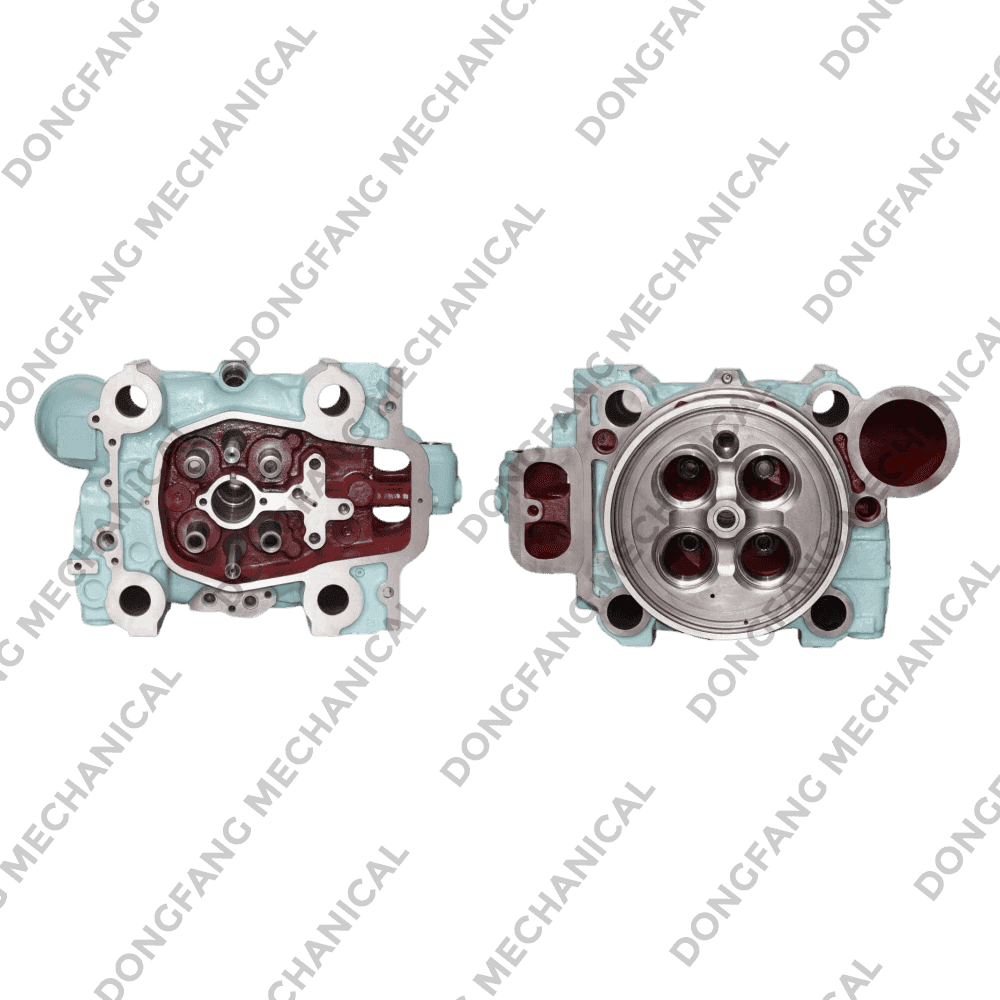
The head carries the combustion chambers, valve seats, valve guides, injector bores, and cooling passages. On raw-water-cooled marine versions, the same casting also faces salt water, silt, and galvanic corrosion. A plain-language explanation of the part is available in this guide to what a cylinder head is, which helps separate wear items from casting failures.
Typical applications and duty cycles
Two-cylinder diesels show up where low weight, fuel economy, and simple service access matter more than high power density. Common applications include sailboat auxiliaries, small fishing and workboats, 8 to 20 kW generator sets, irrigation and transfer pumps, compact tractors, compressors, and light construction equipment. Each duty cycle loads the cylinder head differently. A generator running at constant speed and load sees steady thermal stress but little vibration variation. A marine auxiliary sees variable load, frequent cold starts, and raw-water corrosion. A pump or tractor may run at high load for long periods with poor airflow around the engine.
Marine service is especially demanding. A two-cylinder auxiliary often sits in a tight compartment with limited ventilation, and the cooling system may be direct raw-water or a heat exchanger with a raw-water circuit. Salt water does not have to enter the combustion chamber to cause damage. It can corrode the head's water passages from the outside in, narrowing flow and creating hot spots around the exhaust valve seat. Owners often notice the problem only after overheating, coolant loss, or a misfire that does not respond to injector service.
Cylinder head failure modes on two-cylinder diesels
Because both cylinders share one casting, the failure modes cluster around thermal cycling and mechanical stress. The most common findings during teardown include:
- Cracks between the valve seats or from a valve seat to the injector bore, usually driven by repeated heat cycles and poor cooling.
- Warped or eroded decks that prevent the head gasket from sealing combustion pressure or coolant.
- Receded or pitted valve seats, which cause hard starting, low compression, and burned valves if ignored.
- Worn valve guides that let oil into the intake or exhaust port and accelerate seat wear.
- Corrosion and scale in the cooling passages, often severe on raw-water-cooled engines.
- Injector bore distortion or seat damage, which changes spray direction and can damage the piston crown.
Symptoms rarely point to one cause on their own. White exhaust after warm-up, bubbles in the coolant, a pressurized expansion tank, milky oil, or a cold-start misfire can all come from a failed head gasket or a cracked casting. A compression test and a cooling-system pressure test are useful first steps, but a removed head should still be checked for flatness, crack indications, and valve seat condition before it is reused.
When a replacement cylinder head makes sense
A replacement head is usually the better economic choice when the existing casting is cracked, badly warped, or corroded beyond reliable repair, and when the block, crankshaft, and connecting rods remain serviceable. A rebuild that reuses a marginal head can cost more in repeat labor than a replacement casting, especially on a marine auxiliary where access is difficult. The decision should be based on measured condition, not on engine hours alone. A low-hour engine that overheated may need a head. A high-hour engine that has always run cool may not.
Compatibility is the main risk. Two-cylinder engine families often share external dimensions but differ in port spacing, injector angle, valve train layout, and cooling passage geometry. Ordering by horsepower or by a generic model name is not enough. The safer route is to match the engine model, serial number range, and the casting number on the old head. For small marine auxiliaries, a compatible replacement head for Yanmar marine engines is one common route. For compact domestic diesels, the domestic engine range covers another. The product catalog groups these options by engine family so a buyer can compare the casting and valve layout before requesting a quote.
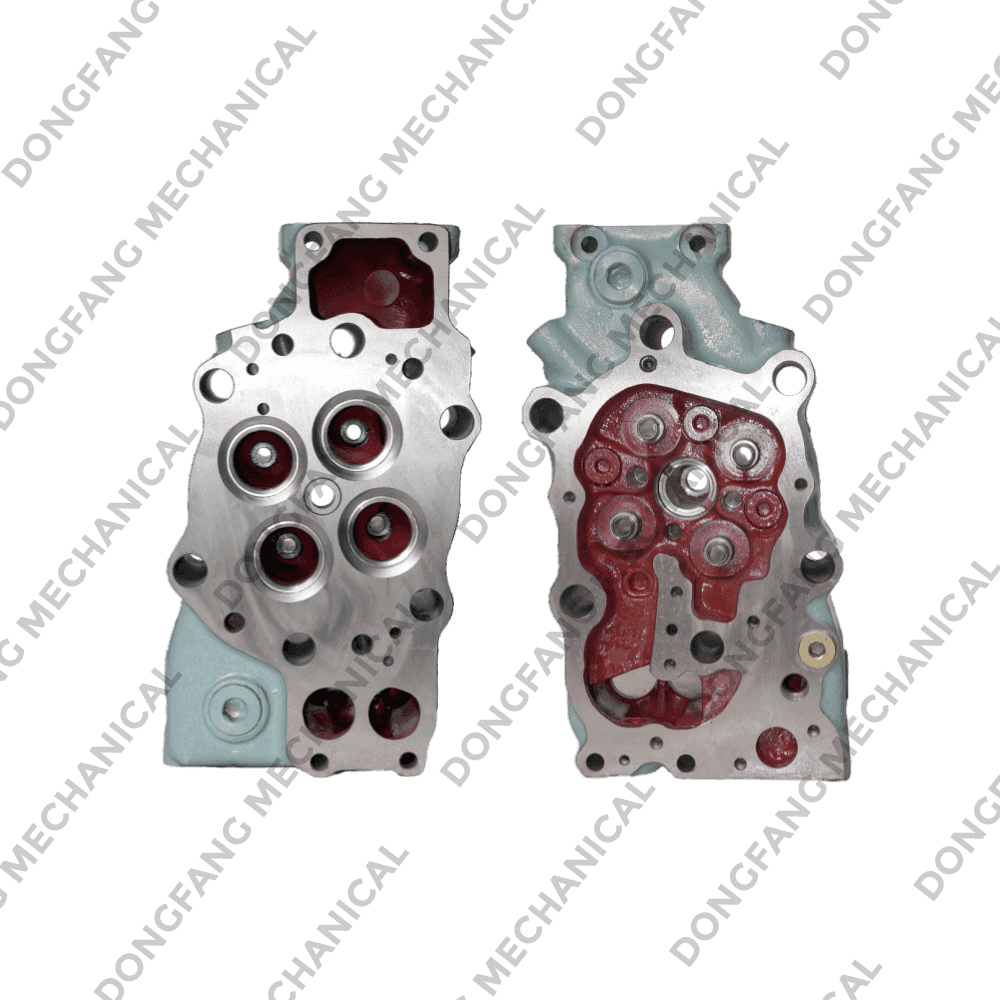 DONGFANG Cylinder Head for Yanmar Marine Diesel EnginesAftermarket replacement for listed Yanmar marine and industrial diesel models, with gray iron or CGI options and pre-delivery inspection for compatibility checks.View Product →
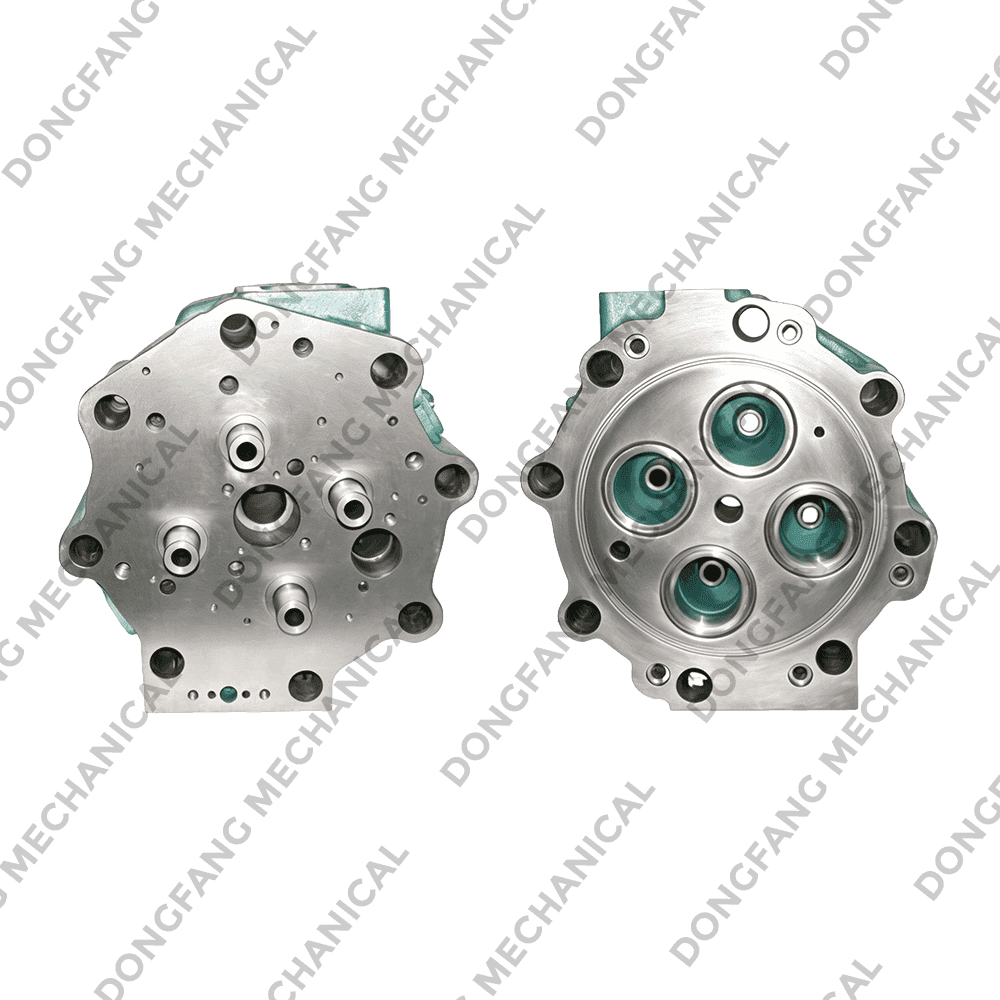 DONGFANG Cylinder Head for Domestic Diesel EnginesAftermarket replacement head for listed domestic diesel models, available in gray cast iron or compacted graphite iron for marine, generator and industrial service.View Product →
Both routes should be treated as engineering matches, not as catalogue equivalents. A replacement head that fits the bolt pattern but has the wrong injector protrusion or valve seat angle can run badly or fail early. If the engine is used in a commercial role, the cost of verifying the casting is small compared with the cost of a second teardown.
Procurement checks before ordering
Use the old head and the engine data plate as the primary evidence. The table below summarizes the checks that separate a workable replacement from a costly mismatch.
| Check | Why it matters | What good looks like |
|---|---|---|
| Engine model and serial number | Two-cylinder families share external dimensions but differ in port layout, injector angle, and valve train. | Casting or parts list confirms the exact model, not just the horsepower rating. |
| Deck flatness | Warpage prevents gasket sealing and causes coolant or compression leaks. | Within the engine maker's limit, often 0.05 mm or less across the deck. |
| Valve seat condition | Diesel seats endure high pressure and heat; poor seats cause hard starting and burned valves. | Seat runout and width within specification, with seats hardened for diesel service. |
| Pressure test | Internal cracks may not be visible during a normal inspection. | No leakage at the specified test pressure, with a test record supplied. |
| Cooling passage geometry | Raw-water engines corrode; wrong passages restrict flow and create hot spots. | Passage layout matches the old head, with no blocked or added holes. |
| Injector bore and protrusion | Incorrect depth changes spray pattern and can damage the piston. | Injector seats cleanly and protrudes to the specified dimension. |
| Documentation | Without traceability, a compatible head is hard to verify. | Casting number, material grade, and inspection report supplied. |
Installation and first-run notes
Installation quality decides whether a correct head performs correctly. Clean the block deck and head bolt holes, check head bolt length and thread condition, and use the gasket specified for the engine and duty. Torque in the maker's sequence in stages, then apply the specified angle if the fasteners are torque-to-yield. Do not reuse torque-to-yield bolts unless the manual allows it. Set valve clearance after the head is torqued, not before. On marine engines, inspect the heat exchanger and raw-water circuit while the cooling system is open. A new head can be damaged by the same blocked passage that ruined the old one.
After the first run, check coolant level, oil condition, and exhaust color at normal operating temperature. Re-torque only where the engine maker specifies it, and recheck valve clearance after the initial break-in period. A two-cylinder diesel will always vibrate more than a four-cylinder, but new knocking, white smoke, or coolant loss after the repair is not normal and should be investigated before the engine returns to hard duty.
Common questions
How long should a 2 cyl diesel cylinder head last?
There is no fixed hour limit. In clean, coolant-conditioned service, a cast iron head can last the life of the engine. In raw-water marine service with poor maintenance, corrosion and overheating can shorten that to a few thousand hours. Condition testing is more reliable than a calendar or hour estimate.
Can a cracked two-cylinder head be repaired?
Some cracks can be pinned or welded, but the repair must be assessed against the cost and risk of a replacement. Cracks between valve seats and injector bores are usually a replacement signal, especially on a shared casting where both cylinders are affected.
Is a replacement head as good as an original?
It depends on material, machining, and verification. A replacement head with the correct alloy, seat hardness, pressure test, and dimensional inspection can be a sound repair. A part with no traceability and no casting match is a procurement risk, regardless of the label.